New York
Brooklyn vs Manhattan: Where to Stay in New York and Why It Matters
January 5, 2026
The choice of where to stay in New York is not logistical. It is philosophical.
Choosing where to stay in New York is not logistical. It is philosophical. Manhattan and Brooklyn are not simply two boroughs connected by bridges and subway lines. They are two different relationships with the city, two different ways of being in New York, two different answers to what you are looking for when you come here. The traveler who chooses Manhattan is choosing proximity, density, and the full intensity of the world’s most concentrated urban experience. The traveler who chooses Brooklyn is choosing a different New York. It is slower, more residential, more diverse, and increasingly more interesting than the island it faces across the East River.
This is not a guide that tells you where to stay based on proximity to attractions. Both boroughs are well connected to everything that matters in New York. The subway runs frequently, the bridges are walkable, and the distances are manageable. This is a guide to what each borough feels like to live in for a week, and what that feeling produces in terms of experience, understanding, and memory.
For most travelers, the best answer is to stay in one and spend significant time in the other. The choice of which is which depends on who you are.


The Case for Manhattan
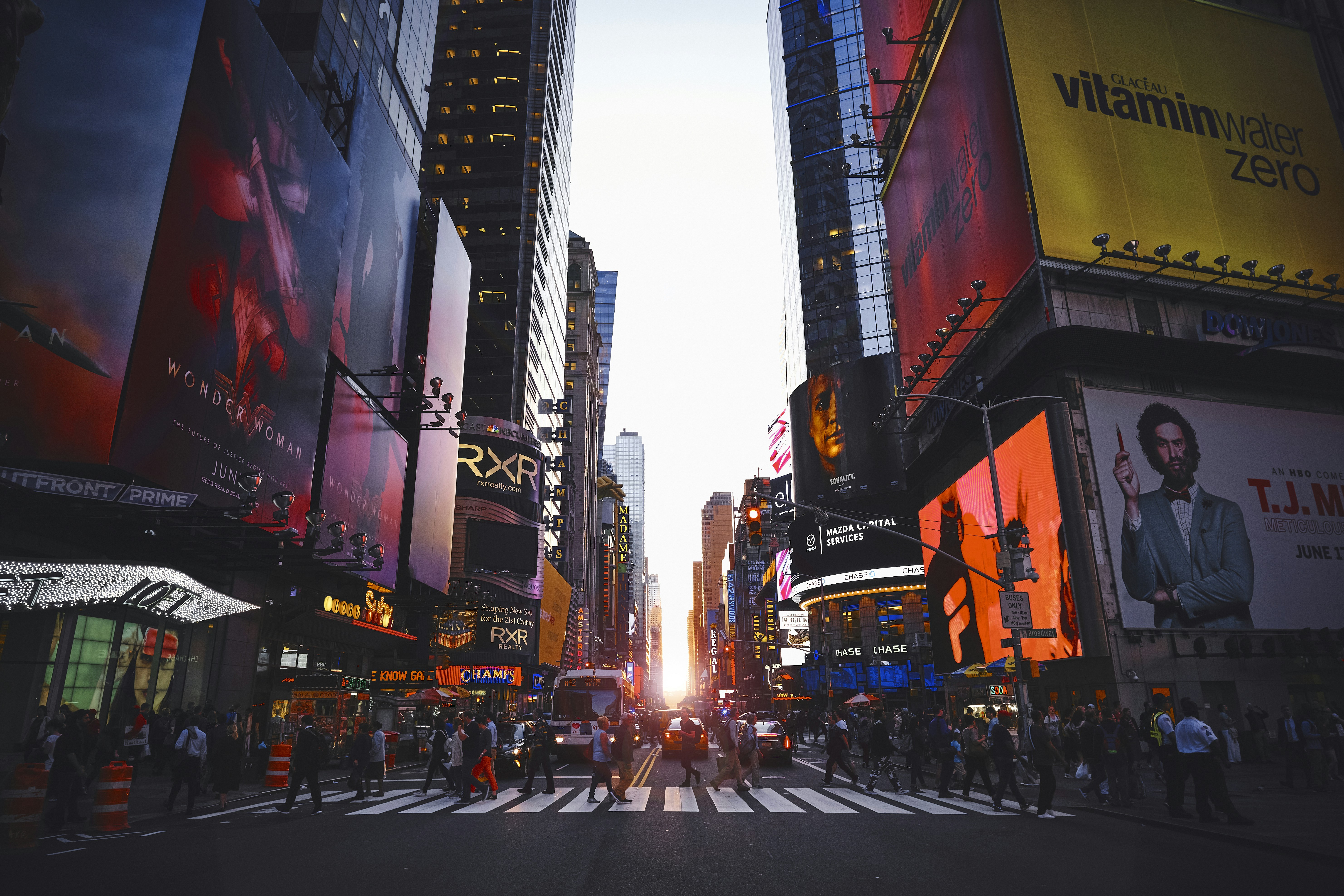
Manhattan makes the case for itself with extraordinary efficiency. You step out of your hotel and you are in it — the density, the noise, the vertical ambition, the sense of being at the centre of something enormous and important. No other city in the world produces this feeling with the same consistency and the same intensity. Paris produces beauty. London produces depth. Tokyo produces order. Manhattan produces the particular electricity of a city that has always believed it is the most important place on earth and has, for long enough, been right.
The practical case for Manhattan is straightforward. The major cultural institutions — the Met, the MoMA, the Guggenheim, Lincoln Centre, the museums of the Upper West Side — are here. The best restaurants, with some significant exceptions, are here. The Broadway theatres are here. The financial district, the historic neighbourhoods of the West Village and the East Village, the markets of Chelsea and the Lower East Side — all of this is most conveniently accessed from a Manhattan base.
The West Village is the neighbourhood TravelScope recommends for first-time Manhattan visitors. The scale is human — the streets predate the grid, the buildings are low, the character is genuine. The restaurants are among the best in the city. The proximity to the High Line, the Hudson River Park, and the Meatpacking District gives access to the best of the West Side without the anonymous quality of Midtown. Stay in the West Village and you will feel like a New Yorker rather than a tourist within twenty-four hours.
For those who want to be in the centre of the centre, the neighbourhoods around Gramercy Park and the Flatiron District offer a Manhattan that is residential enough to feel liveable and central enough to feel connected. Avoid Midtown as a base unless convenience to specific venues is the overriding priority — the neighbourhood has no character and exists primarily to process the city's commercial traffic rather than its residents.
The Case for Brooklyn
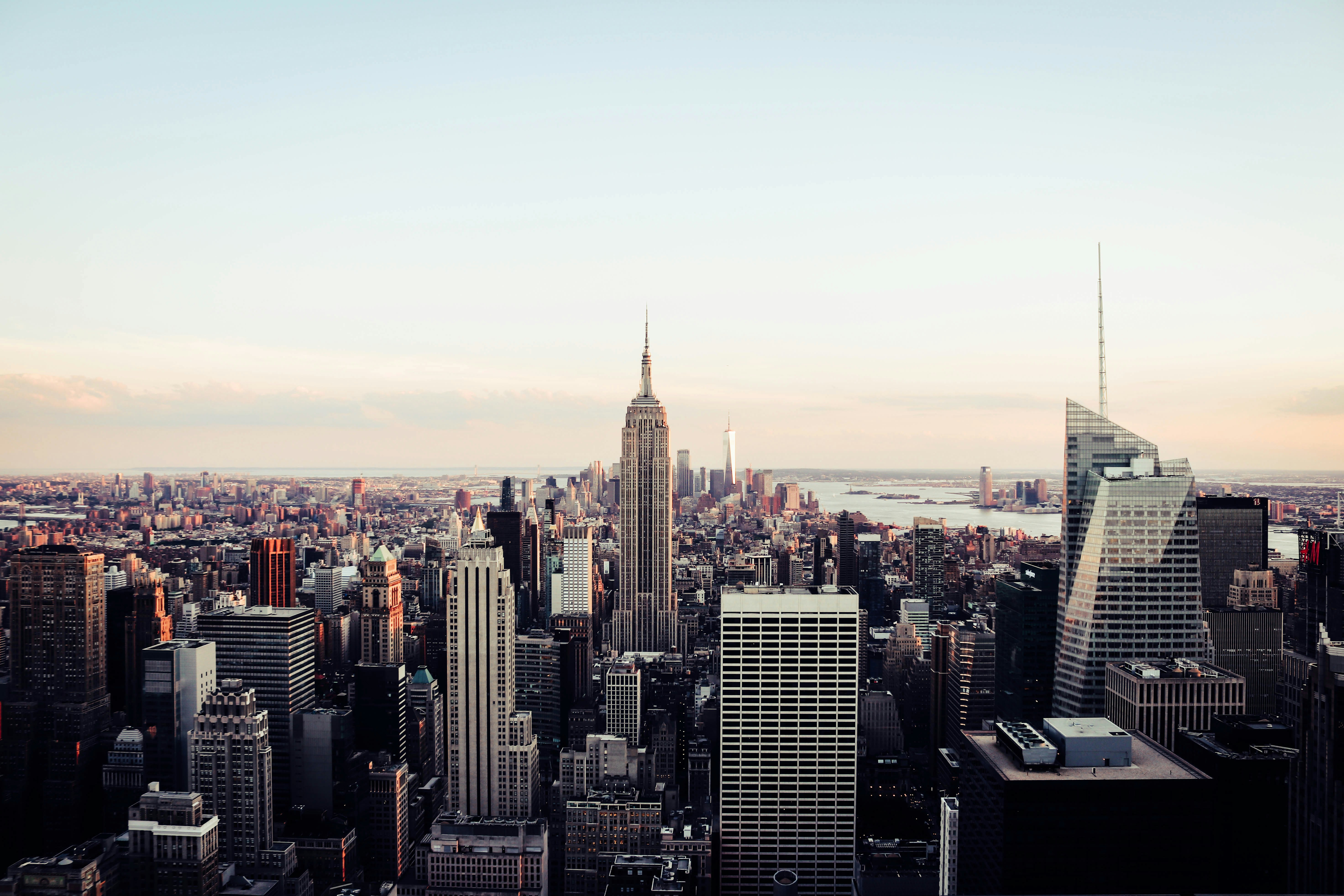
Brooklyn makes its case more quietly and more convincingly with every year that passes. The borough that was once described as what you could afford when you couldn't afford Manhattan has become, for significant numbers of the most interesting people in New York, where you choose to live when you could afford Manhattan but have better judgment. The restaurants are better. The coffee is better. The bars are more interesting. The streets are more human. And the view of Manhattan from the Brooklyn waterfront — the skyline across the water, best at dawn and at dusk — is the finest view of the city available anywhere.
The practical case for Brooklyn requires acknowledging the subway. The connection between Brooklyn and Manhattan is good — the F, G, A, C, 2, 3, 4, 5, N, R, Q lines all cross the East River, and journey times from the best Brooklyn neighbourhoods to Midtown or Lower Manhattan are typically between twenty and forty minutes. This is not inconvenient by any standard that applies to a city of this scale. But it requires the willingness to spend time on the subway, which some travelers find more acceptable than others.
Dumbo is the neighbourhood TravelScope recommends for first-time Brooklyn visitors who want to be close to Manhattan and in one of the most beautiful parts of the borough. The cobblestone streets under the Manhattan and Brooklyn bridges, the waterfront park with its unobstructed views of the skyline, the independent restaurants and the Time Out Market — Dumbo offers a Brooklyn experience that is accessible, beautiful, and genuinely distinct from anything available on the island.
Williamsburg is the neighbourhood for those who want the full Brooklyn experience — the density of restaurants and bars on Bedford Avenue, the Smorgasburg food market on Saturday mornings, the music venues, the art galleries, and the particular creative energy of a neighbourhood that has been at the forefront of New York's cultural life for two decades. The connection to Manhattan on the L train is direct and frequent, though the L's reliability has historically been variable.
The Neighbourhoods Worth Knowing
West Village, Manhattan — The best residential neighbourhood in Manhattan. Human scale, excellent restaurants, genuine character. Base of choice for the intentional traveler who wants Manhattan without the tourist density of Midtown.
Dumbo, Brooklyn — The most beautiful neighbourhood in Brooklyn and the easiest entry point for Manhattan visitors crossing the river. The view from the corner of Washington Street and Water Street, framed by the Manhattan Bridge, is one of the most photographed views in New York for good reason.
Williamsburg, Brooklyn — The cultural heart of contemporary Brooklyn. Best on Saturday mornings when the Smorgasburg market is running and the neighbourhood is at its most alive.
Harlem, Manhattan — The most historically rich and culturally significant neighbourhood in Manhattan that most tourists visit without understanding. Come for the food, the gospel on Sunday mornings, and the architecture of the brownstones that line the residential streets north of 125th.
Red Hook, Brooklyn — The most remote and most interesting neighbourhood in Brooklyn — a post-industrial waterfront that has accumulated, over the past decade, some of the finest restaurants and the most interesting creative businesses in the city. Worth the journey from anywhere in New York.
The Decision
Brooklyn or Manhattan is ultimately a question of what you want New York to feel like. If you want to be inside the intensity — to feel the city at full volume, to walk out your door and be immediately in the experience — choose Manhattan, and choose the West Village or Gramercy over Midtown. If you want to observe the intensity from a position of slight remove — to have the city available to you without being consumed by it — choose Brooklyn, and choose Dumbo or Williamsburg depending on your relationship with cobblestones and creative density.
The travelers who get the most from New York are often those who make the wrong choice initially and then spend the rest of their stay discovering that the other borough was what they needed. This is not a failure of planning — it is New York working as intended, revealing itself differently from every angle.
There is no wrong answer. There is only the answer that is right for who you are — and New York will tell you which one that is within twenty-four hours of your arrival.
📍 Explore New York in depth — read the full TravelScope New York Experience Guide → /experiences/new-york-travel-guide
Stay in the TravelScope Circle
Get stories and new curated experiences — delivered to your inbox.
:max_bytes(150000):strip_icc():focal(683x228:685x230)/jfk-carolyn-bessett-kennedy-fashion-tout-21126-e6134dacb21245bda44115d581c7c060.jpg)