Kuala Lumpur
Jalan Alor at Night: The Street That Defines Kuala Lumpur
January 8, 2026
At night, Jalan Alor becomes more than a street. It becomes a system — of food, movement, and density that defines Kuala Lumpur.
Jalan Alor does not exist in the same way during the day as it does at night.
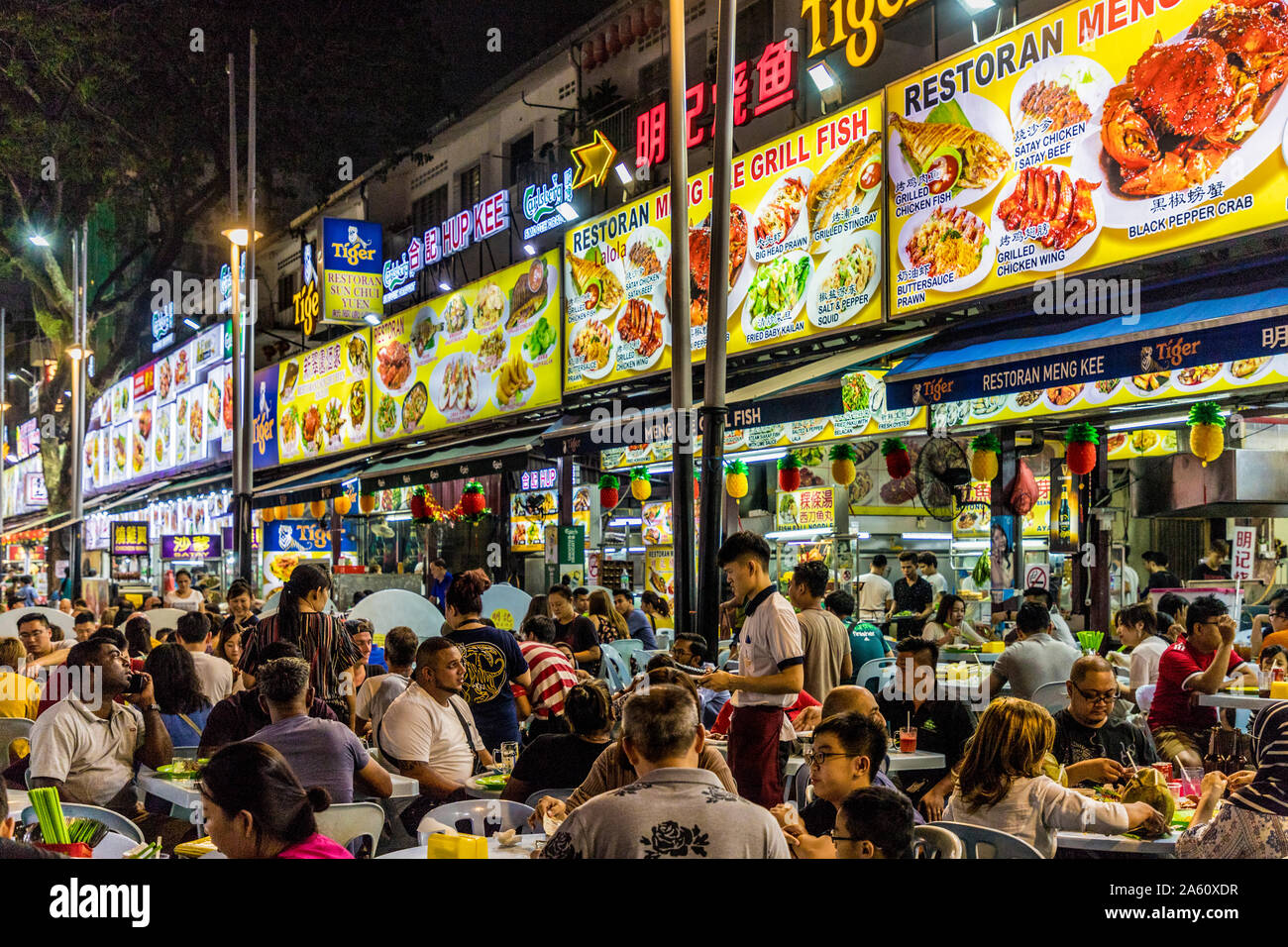
By daylight, it is a relatively ordinary street — functional, partially open, and without the density that defines it later. But as evening approaches, the space reorganizes itself. Tables extend outward, grills ignite, lights intensify, and the street transitions from a route into a destination.
This transformation is not abrupt, but it is decisive. What was previously a street becomes an environment — one structured around food, but sustained by movement, interaction, and repetition.
TravelScope approaches Jalan Alor not as a place to eat, but as a system to enter — one that reveals Kuala Lumpur through how it gathers, circulates, and occupies space at night.

The Shift: From Street to System
The defining characteristic of Jalan Alor is its transformation.
As the day ends, the street expands beyond its physical limits. Sidewalks dissolve into seating areas, storefronts extend into the road, and the distinction between pedestrian and vendor space becomes fluid. Movement adapts to this new structure, no longer linear, but distributed.
This is not informal. It follows a pattern that repeats every evening, producing consistency within variation. Each stall occupies a known position, each table aligns within a broader flow, and the entire street operates as a coordinated system without appearing rigid.
Understanding Jalan Alor begins with recognizing this shift.
The Density: Movement Without Order
At peak hours, Jalan Alor becomes dense, but not chaotic.
People move continuously through the space, navigating between tables, stalls, and other visitors without a fixed path. The density is high, but it distributes itself, allowing movement to persist even at its most compressed.
This creates a specific dynamic. You are never fully stationary, even when seated. The environment remains active, and your position within it shifts subtly as others move around you.
The experience is not about finding space. It is about existing within it.
The Food: Selection Through Observation
Jalan Alor presents an extensive range of food, but its structure does not prioritize clarity.
Menus overlap, dishes repeat across stalls, and differentiation is often subtle. Attempting to identify the “best” option immediately reduces the experience to a decision rather than a process.
Observation becomes essential. Watch where locals gather, where turnover is high, where movement concentrates. These indicators are more reliable than static recommendations.
Eating here is not a single choice. It is a sequence. One dish leads to another, one stall to the next, and the experience builds through accumulation rather than selection.
The Sound: A Continuous Layer
Sound in Jalan Alor is constant, but layered.
Voices, cooking, movement, and background noise combine into a continuous field that does not resolve into individual elements. This is not silence interrupted by activity. It is activity sustained without pause.
Over time, this sound becomes less intrusive and more structural. It defines the environment as much as the physical space does.
The Light: Artificial Clarity
Light in Jalan Alor is entirely artificial, but precisely arranged.
Neon signs, stall lighting, and overhead fixtures create a brightness that isolates the street from its surroundings. The environment becomes visually self-contained, drawing attention inward and reducing the visibility of what lies beyond it.
This concentration of light reinforces the experience. The street becomes its own environment, distinct from the rest of the city.
The Timing: When to Arrive
Jalan Alor evolves throughout the evening.
Early hours — around 6–7pm — provide a more accessible entry point. The street is active, but not yet saturated. Movement is easier, and the structure more legible.
Peak hours — 8–10pm — introduce maximum density. The energy increases, but clarity decreases. The experience becomes more immersive, but also more demanding.
Late evening extends the experience without reducing it entirely. Some stalls close, but enough remain to sustain the environment.
Timing does not determine whether Jalan Alor is worth visiting. It determines how it is experienced.
The Edges: What Surrounds It
Jalan Alor does not exist in isolation.
It is located within Bukit Bintang, one of Kuala Lumpur’s most active districts, and the transition between the street and its surroundings is immediate. Leaving Jalan Alor reintroduces structured movement — sidewalks, traffic, and defined paths.
This contrast clarifies its role. Jalan Alor is not representative of the entire city. It is a concentrated expression of one aspect of it.
The Participation: Eating Within the System
Eating on Jalan Alor requires participation rather than observation.
You choose a table, often without full information. You order, sometimes with minimal explanation. You eat within a space that continues to move around you.
There is no separation between experience and environment. You are part of the system, not outside it.
The Limit: What It Is Not
Jalan Alor is not a refined culinary destination.
It is not designed for quiet, for privacy, or for controlled dining. Quality varies, environments are inconsistent, and the experience depends on engagement rather than service.
Approaching it with different expectations leads to misinterpretation. Understanding its structure allows it to function as intended.
Closing
Jalan Alor is often described as a street food destination, but this description reduces it to its most visible element.
What defines it is not only the food, but the system it creates — a space where movement, density, and interaction converge into a continuous environment.
To experience it fully is not to find the best dish, but to enter the system and move within it — allowing the structure of the street to define the experience rather than imposing one onto it.
📍 Explore Kuala Lumpur in depth — read the full TravelScope Kuala Lumpur Experience Guide →
/experiences/kuala-lumpur-travel-guide

