Munich
The Three Pinakotheken: A Day in Munich's Museum Quarter
December 20, 2025
Three world-class museums within walking distance of each other — and one of the great concentrations of art available anywhere in Europe.
Munich is one of Europe’s great art cities, but that fact is not widely known. The Louvre draws nine million visitors a year. The Uffizi draws four million. Munich’s three Pinakotheken — the Alte, the Neue, and the Pinakothek der Moderne — draw a combined total of about one million. As a result, three museums of international quality are consistently less crowded than they deserve to be, and more available to visitors who seek them out, than almost any comparable institution in Europe. This is Munich’s great gift to the art traveler: world-class collections with human-scale crowds.
The three museums occupy a single neighborhood — the Maxvorstadt, Munich’s university and museum quarter — and are minutes apart on foot. A day spent moving through all three, or a more concentrated morning or afternoon in one, is among the finest cultural experiences available in Germany. It rewards visitors who know nothing about art as much as those who know a great deal. The collections are extraordinary. The buildings are extraordinary. And the experience of being in them, without the crowd management the Louvre or the Uffizi demands, is extraordinary.
This guide covers all three museums and proposes a way of spending a day in Munich's museum quarter that produces the maximum experience with the minimum exhaustion — which is, in the end, the only sensible approach to art at this level of density and quality.
The Alte Pinakothek: Old Masters and the Wittelsbach Collection
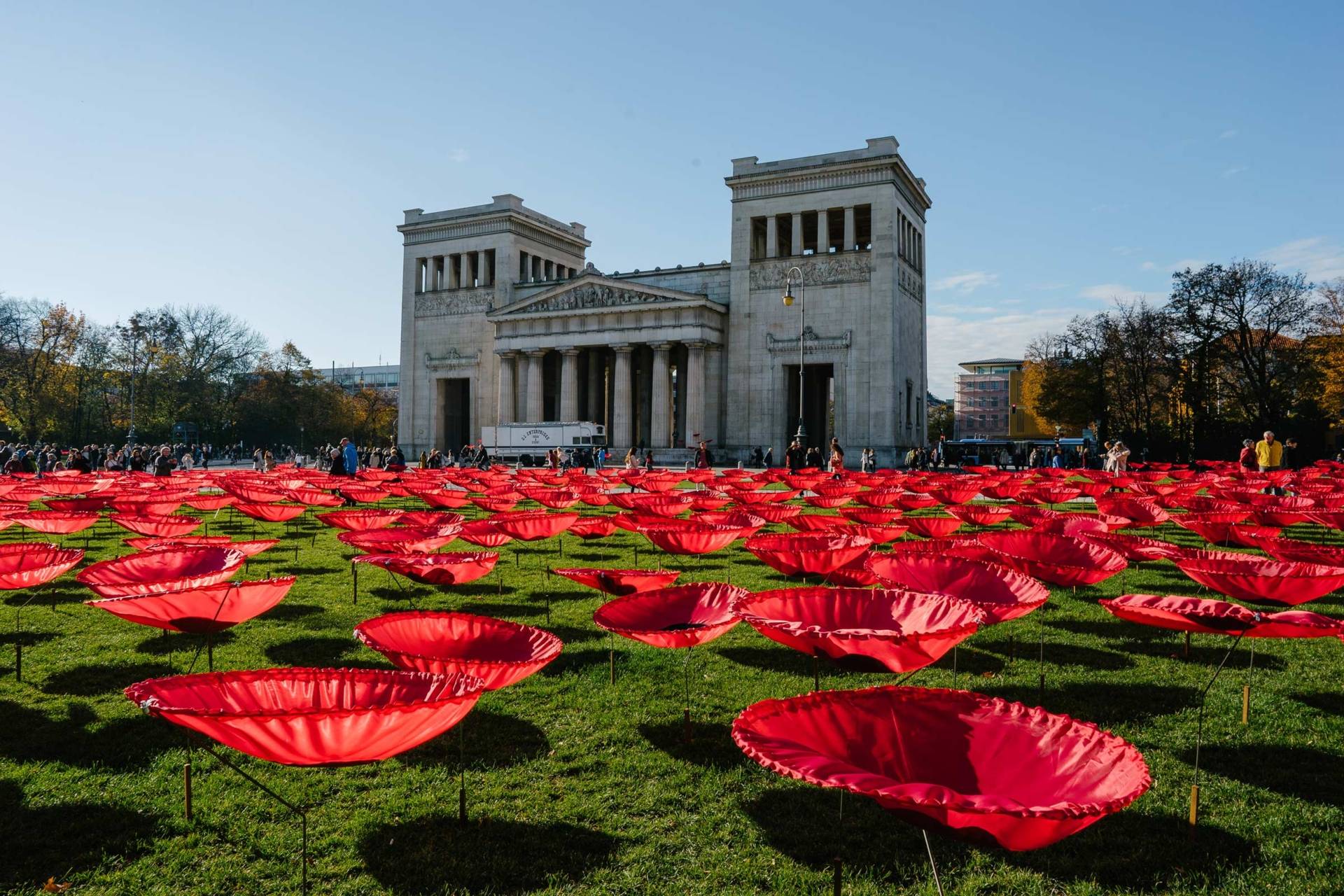
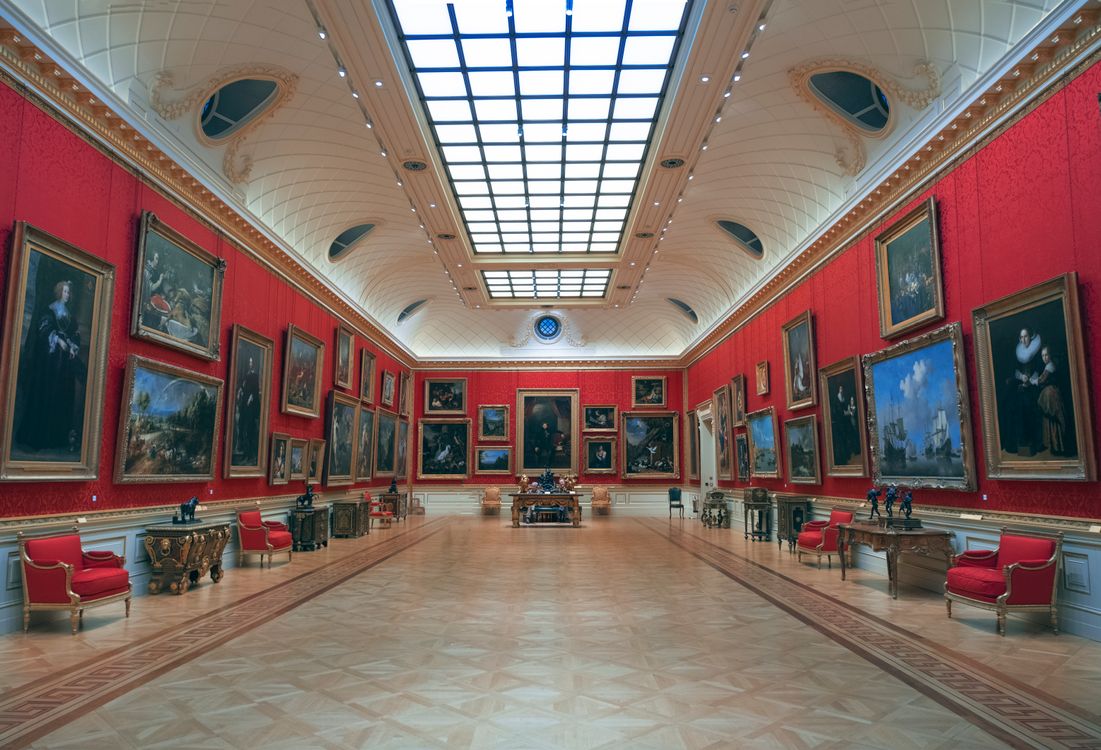
The Alte Pinakothek is one of the oldest public art museums in the world — opened in 1836 to house the art collection of the Wittelsbach dynasty, which had been accumulating works since the sixteenth century with the focused acquisitiveness of a family that understood that art was both cultural capital and political statement. The building — designed by Leo von Klenze in the neo-Renaissance style — was severely damaged in the Second World War and rebuilt in a way that retained the original structure while accepting, honestly, the scars of its destruction. The patched stonework of the exterior is not a failure of restoration but a deliberate acknowledgment of history — Munich's equivalent of the Hiroshima dome.
The collection inside is of a quality that requires selective visiting rather than comprehensive coverage — attempting to see everything in the Alte Pinakothek in a single visit is a guarantee of exhaustion and diminishing returns. TravelScope recommends choosing three rooms and spending a proper amount of time in each rather than walking through the entire collection at a pace that prevents genuine engagement with any of it.
The Dürer room is the essential starting point. The Self-Portrait of 1500 — Dürer presenting himself in a Christ-like frontal pose, the first time a Northern European artist had represented himself in this way — is one of the most important and most startling paintings in German art. The confrontation it produces, across five centuries, between the viewer and the painter's extraordinary gaze, is one of the experiences that justifies the journey to Munich. The Four Apostles, painted in 1526 as Dürer's gift to the city of Nuremberg, hang in the same room and represent the summit of his late style.
The Rubens collection is the largest outside Antwerp — the painter served as court artist to the Wittelsbach Maximilian I and produced for him works of a scale and ambition that required the largest rooms in the museum to contain them. The Last Judgement — four metres wide and six metres high — is the kind of painting that makes you understand why Rubens had a team of assistants and why they were kept extremely busy. Stand close enough to see the individual brushwork and then stand far enough back to see the composition. Both distances are necessary.
The Dutch Golden Age rooms contain Rembrandt's The Sacrifice of Isaac and several self-portraits of the middle period — the decade between the success of The Night Watch and the financial ruin that followed it, when Rembrandt's technique reached its greatest refinement and his circumstances their greatest difficulty. The self-portraits of this period are among the most psychologically complex paintings in Western art.
The Neue Pinakothek: The Nineteenth Century Reconsidered
The Neue Pinakothek — opened in 1853 by Ludwig I to house the art of his own century — was destroyed in the Second World War and rebuilt in a new building by Alexander von Branca, opened in 1981, that is itself a significant work of post-war German architecture. The collection it contains — European painting and sculpture from the late eighteenth century to the early twentieth — is the finest of its period in Germany and one of the finest in Europe, covering the full range of nineteenth-century art from the Romantic period through Impressionism to early Modernism.
The Nazarene and Romantic rooms — the German painters of the early nineteenth century who sought to revive the spiritual intensity of medieval and Renaissance religious art — are the most specifically German section of the collection and the least internationally known. The work of Caspar David Friedrich, whose landscapes of fog and solitude defined the Romantic conception of nature as a mirror of the human interior, is represented here by several major works that reward extended contemplation. Friedrich's paintings do not yield their meaning quickly — they require the kind of slow looking that museums rarely encourage and that the relatively uncrowded Neue Pinakothek makes possible.
The Impressionist rooms are the most visited section of the museum and contain works by Manet, Monet, Cézanne, and Van Gogh that would be the centrepieces of any collection in the world. Van Gogh's Sunflowers — one of the series of sunflower paintings made in Arles in 1888, the year before his breakdown — hangs here with the particular intensity that Van Gogh's work always produces in person and that reproduction never quite captures. The colour, the impasto, the urgency of the brushwork — these are things that exist in the physical object and are lost in any reproduction. Stand in front of the Sunflowers for fifteen minutes and you will understand something about painting that no book can teach.
The Pinakothek der Moderne: Four Collections in One Building
The Pinakothek der Moderne — opened in 2002 in a building by Stephan Braunfels that is itself one of the finest pieces of contemporary architecture in Munich — is not one museum but four, sharing a single building: the art collection, the design collection, the architecture collection, and the graphics collection. The combination produces a museum experience of unusual breadth and cross-disciplinary richness — the relationship between fine art, applied design, architectural thinking, and graphic communication is made visible by their physical proximity in a way that separate institutions cannot achieve.
The art collection — the Staatsgalerie moderner Kunst — covers the twentieth and twenty-first centuries with a comprehensiveness that reflects decades of serious acquisition. The German Expressionist rooms are the strongest section of the collection — the work of Kirchner, Beckmann, and the artists of Die Brücke and Der Blaue Reiter movements represented with a depth that reflects Munich's historical importance as a centre of German modernism. Wassily Kandinsky, who lived and worked in Munich for fifteen years before the First World War and developed his theory of abstract painting here, is represented by works from the critical period of his development toward pure abstraction.
The design collection on the ground floor is the museum's most distinctive offering and the one most likely to surprise visitors who came for the painting. The collection traces the history of design from the Jugendstil movement through the Bauhaus and into contemporary industrial design — the chairs, the lamps, the typefaces, the household objects that have shaped the material culture of the twentieth century displayed with the seriousness of a collection that understands design as cultural history rather than applied decoration. The Bauhaus section is particularly strong — Breuer's chairs, Gropius's desk, the typography of Herbert Bayer — and gives context to the Munich design tradition that continues in the contemporary automotive and industrial design for which the city is internationally known.
How to Spend the Day
A day in Munich's museum quarter should not begin at a museum. It should begin at the Café Luitpold on the Briennerstrasse — the historic café that has been serving the neighbourhood since 1888 and that produces a breakfast of sufficient quality to prepare the mind for serious looking. Order the Frühstück, drink the coffee, read the Süddeutsche Zeitung if your German extends that far, and arrive at the Alte Pinakothek at 10am when it opens.
Spend two hours in the Alte Pinakothek — Dürer, Rubens, Rembrandt, and nothing else. Leave before noon and walk to the Neue Pinakothek — fifteen minutes on foot through the museum quarter. Eat lunch at the museum café — the Neue Pinakothek café is one of the better museum cafés in Munich — and spend two hours in the nineteenth century: the Romantics, the Impressionists, Van Gogh.
Cross the square to the Pinakothek der Moderne in the mid-afternoon — the light through the central dome of the building is at its finest between 2 and 4pm. Spend ninety minutes in the design collection and the German Expressionist rooms. Leave by 5:30pm, walk to the English Garden ten minutes away, and sit in the beer garden for an hour before dinner.
This is a full day of looking — eight hours of serious engagement with art across three centuries — and it will leave you with the particular exhaustion that only genuine cultural experience produces. It is worth every minute of it.
The three Pinakotheken are Munich's best kept cultural secret — three world-class museums in one walkable neighbourhood, available to anyone who looks beyond the beer halls and the festival tents. Munich is, among many other things, one of the great art cities of Europe. The Pinakotheken are the proof.
📍 Explore Munich in depth — read the full TravelScope Munich Experience Guide → /experiences/munich-travel-guide
Stay in the TravelScope Circle
Get stories and new curated experiences — delivered to your inbox.

