Turc and Caicos
Salt Cay: The Island That Time Forgot
January 18, 2026
Small, quiet, and largely unchanged, Salt Cay offers a version of the Caribbean defined by absence — and by what remains because of it.
Salt Cay is not defined by what it offers.
There are no large resorts, no dense infrastructure, and no sequence of attractions designed to organize the experience. What exists instead is a form of continuity — an island that has changed less than others in the Caribbean, not through preservation as a deliberate act, but through a lack of pressure to transform.
This absence is not immediately legible. It requires adjustment.
TravelScope approaches Salt Cay not as a destination to visit in the conventional sense, but as an environment to enter — one in which scale, time, and movement operate under conditions that are increasingly rare.
The Arrival: Entering a Different Scale
Reaching Salt Cay introduces a clear shift.
Transport is limited, schedules are less frequent, and the process of arrival is less structured than in more developed islands. This is not inefficiency. It is a reflection of scale.
From the moment of arrival, the difference is perceptible. The island does not present itself through infrastructure. It remains open.
This transition is not gradual. It is immediate.
The Scale: Small Without Limitation
Salt Cay is small, but its scale does not restrict the experience.
Distances are short, but movement extends. Walking across the island takes little time, yet the perception of space remains. There is no compression of activity, no concentration that reduces variation.
The island does not need to be large to feel expansive.
This is achieved through absence — of density, of interruption, of imposed structure.
The Landscape: Continuity of Land and Water
The relationship between land and water on Salt Cay is direct.
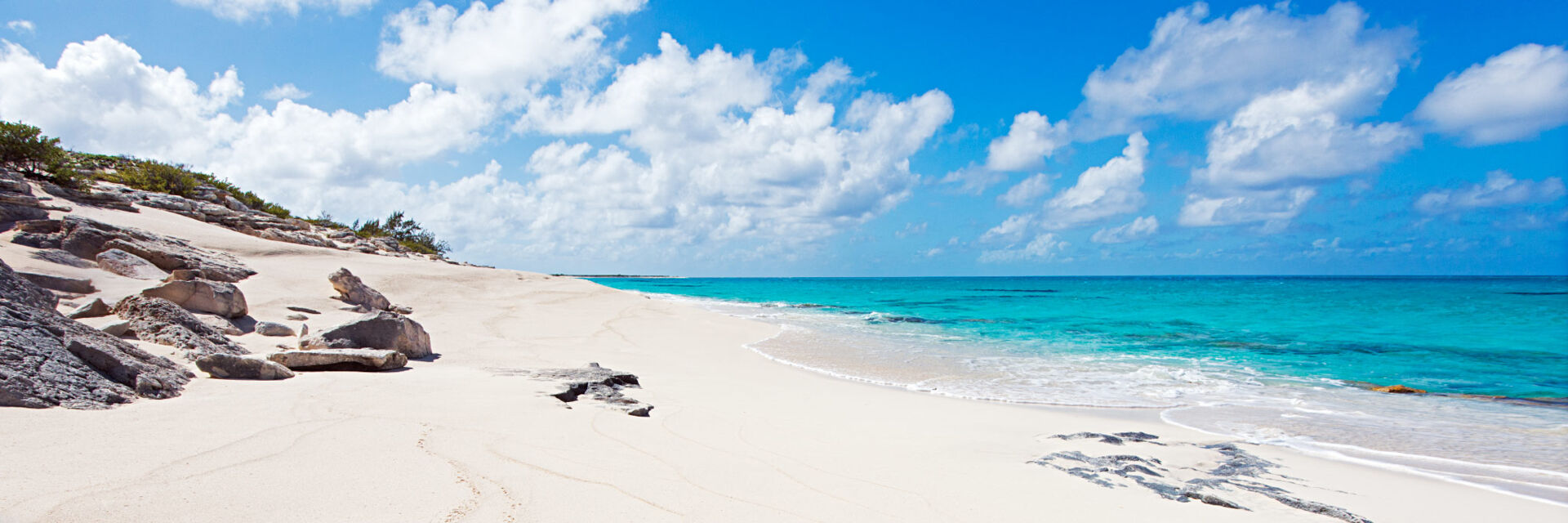
Beaches extend without significant development, and the transition from sand to sea remains uninterrupted. There are no defined zones, no sections that alter the experience significantly from one point to another.
This continuity allows for a different kind of movement. Walking becomes linear, without the need to navigate around structures or adjust to changes in use.
The landscape does not guide. It allows.
The Water: Stillness and Clarity
The water surrounding Salt Cay reflects the broader conditions of Turks & Caicos, but with greater consistency.
Without heavy activity, the surface remains relatively undisturbed. The clarity is immediate, and the gradient of color extends smoothly outward.
Entering the water does not require adjustment. It is accessible at all points.
The experience is not defined by specific locations. It is uniform.
The Settlement: Minimal Presence
The built environment on Salt Cay is limited.
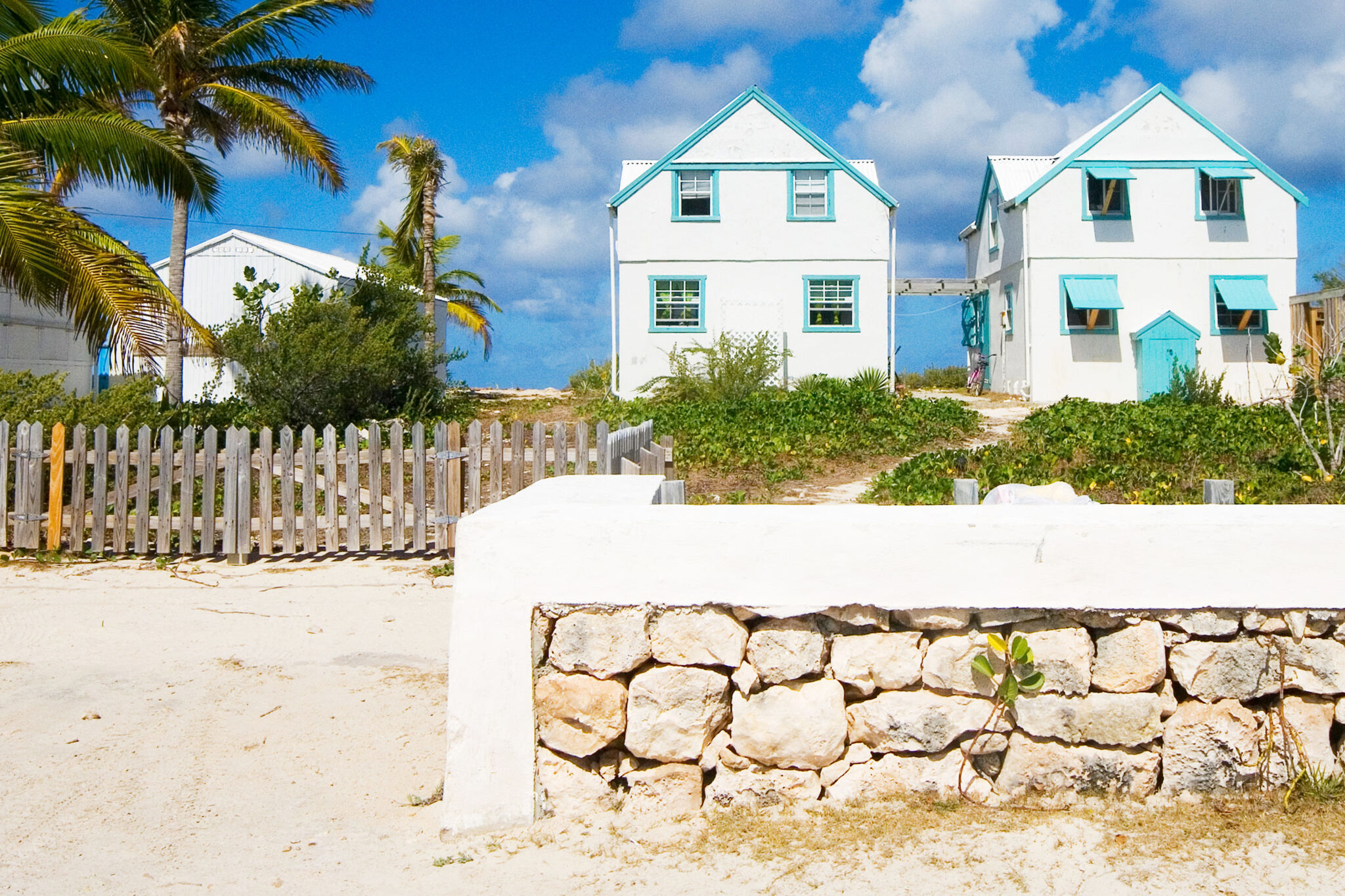
Small houses, remnants of historical structures, and a minimal number of services form a settlement that does not dominate the island. The presence of infrastructure is sufficient, but not extensive.
This balance maintains continuity between built and natural environments. Neither overrides the other.
The island remains legible.
The Time: Days Without Structure
Time on Salt Cay does not follow a defined pattern.
Without a high density of activity, the day is not segmented by external events. There are no fixed sequences that determine when and where movement should occur.
This creates a different relationship with time. It extends, but not indefinitely. It becomes more dependent on individual pacing.
The absence of structure is not disorientation. It is openness.
The Atmosphere: Stability Through Absence
Salt Cay maintains a consistent atmosphere.
Without large fluctuations in activity, the environment remains stable. Changes occur — in light, in weather — but the underlying condition persists.
This stability allows perception to deepen. The experience does not reset with each new location. It continues.
The Access: Limitation as Condition
Access to Salt Cay is limited, and this defines much of its character.
Fewer connections, fewer services, and reduced infrastructure create a barrier that filters entry. This limitation preserves the conditions that define the island.
Ease of access would alter it.
The difficulty is not a drawback. It is structural.
The Contrast: Within Turks & Caicos
Salt Cay exists within Turks & Caicos, but operates under different conditions from islands such as Providenciales.
Where Grace Bay organizes space and activity, Salt Cay disperses them. Where infrastructure defines experience, absence allows it to form.
The contrast is clear, but not oppositional. Each represents a different expression of the same region.
The Limit: What It Is Not
Salt Cay is not a place of constant activity.
It does not offer a wide range of services, nor does it sustain high levels of entertainment. Expecting variety in the conventional sense leads to misinterpretation.
It is also not isolated in a way that removes connection entirely. It remains part of a broader system, but operates differently within it.
Closing
Salt Cay is often described as an island that time forgot, a phrase that suggests preservation through neglect.
What it offers is not absence of change, but a different pace of it.
The island does not present itself through attractions or structured experiences. It exists through continuity — of landscape, of movement, of time.
To experience it fully is not to seek out specific points, but to remain within its conditions long enough for them to become clear.
📍 Explore Turks & Caicos in depth — read the full TravelScope Turks & Caicos Experience Guide →
/experiences/turks-and-caicos-travel-guide