Amsterdam
Beyond the Rijksmuseum: Amsterdam's Lesser-Known Art Spaces
December 22, 2025
Beyond the Rijksmuseum and Van Gogh Museum, Amsterdam reveals a quieter, more experimental art scene — one that requires time and attention to understand.
Amsterdam’s cultural identity is often defined by its major institutions — the Rijksmuseum, the Van Gogh Museum, the Stedelijk — spaces that shape the city’s relationship with art on national and international levels. They are essential, and their prominence is deserved. But they also concentrate attention in ways that risk flattening what is, in reality, a far more distributed and nuanced landscape.
Beyond these institutions, the city sustains a network of smaller museums, independent galleries, and hybrid cultural spaces that operate at a different scale and by a different logic. They are less visible, less monumental, and often less immediately legible. They require intention rather than itinerary.
TravelScope approaches Amsterdam’s art scene not through its icons, but through its margins — places where experimentation, continuity, and local context intersect in ways not designed for mass attention, yet often reward it more precisely.
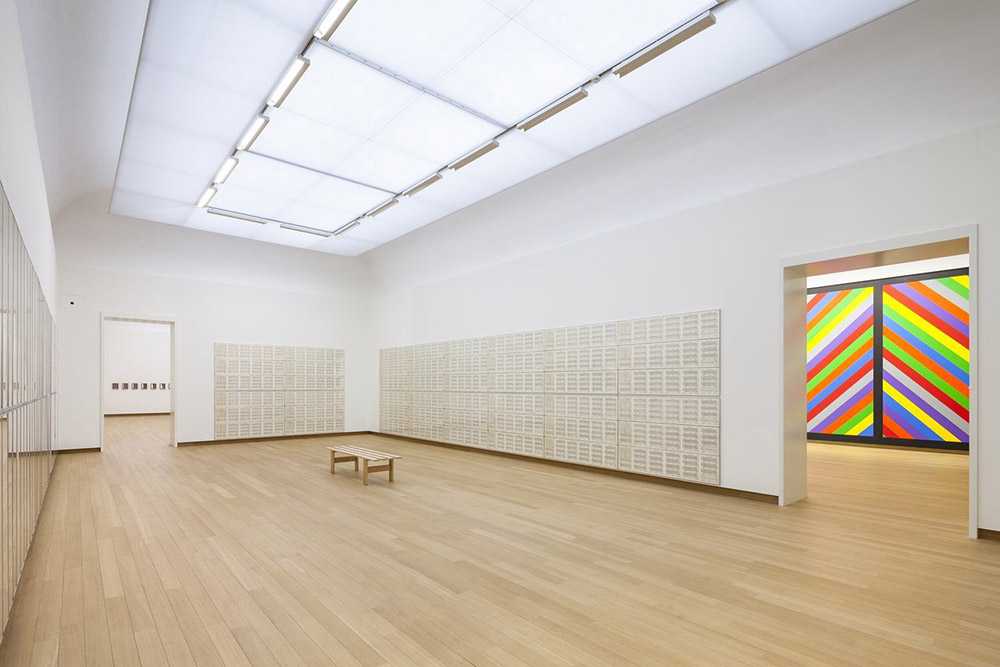
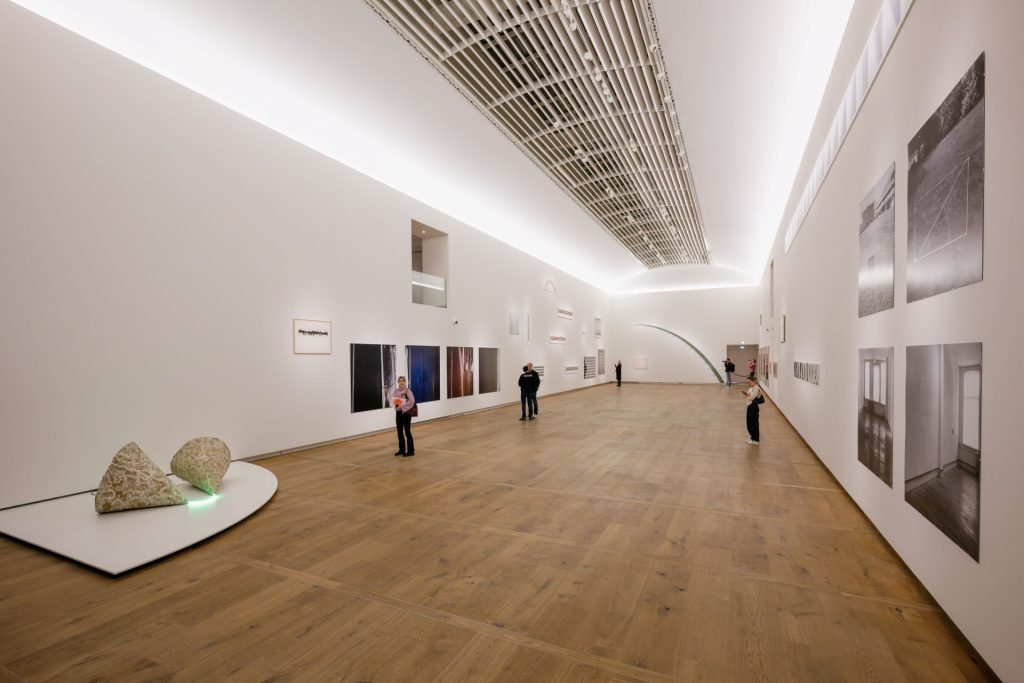
The Shift: From Institutions to Spaces
The transition from major museums to smaller art spaces is not simply a change in scale. It is a change in rhythm.
Large institutions structure the experience. They define entry, progression, and exit. They present narratives that are curated to be understood within a limited timeframe, often by visitors who may not return. The experience is complete, but it is also contained.
Smaller spaces operate differently. They do not always provide a clear beginning or conclusion. Exhibitions can feel provisional, installations temporary, and the relationship between viewer and work less mediated. What is gained is not clarity, but proximity.
In Amsterdam, this shift is particularly visible. The city’s density allows these spaces to exist in close relation to one another, often embedded within residential streets or repurposed buildings, where the boundary between cultural and everyday space becomes less defined.
The Spaces: Where to Look (and How)
Amsterdam’s lesser-known art scene does not organize itself around a single district. It is dispersed, but not randomly.
Areas such as Jordaan, Amsterdam Noord, and parts of Oost host a concentration of independent galleries and project spaces that operate outside the institutional framework. These are not always marked clearly, and their visibility depends less on signage than on awareness.
Entering these spaces often requires a small adjustment. The absence of crowds, the reduced scale, and the proximity to the work can initially feel unfamiliar. There is less guidance, fewer explanations, and more silence.
This is not a limitation. It is an invitation to engage differently — to spend more time with less, to observe without immediate interpretation, and to accept ambiguity as part of the experience.
The Role of the Stedelijk and the Edges of the System
While the Stedelijk Museum remains a major institution, it operates at the boundary between the canonical and the contemporary. It provides a bridge between the structured narratives of larger museums and the more experimental practices found elsewhere in the city.
Understanding this relationship helps situate the broader scene. The Stedelijk contextualizes, but does not contain. The smaller spaces extend, question, and sometimes contradict what is presented within institutional walls.
Together, they form a continuum rather than a hierarchy.
Time and Attention
Experiencing Amsterdam’s smaller art spaces requires a different allocation of time.
Where large museums reward coverage — seeing as much as possible within a limited window — these spaces reward focus. One or two locations, visited without haste, provide more value than attempting to move rapidly between many.
This is not only a practical consideration, but a conceptual one. The scale of the work, the nature of the exhibitions, and the absence of structured flow all benefit from slower engagement.
The objective is not to see everything. It is to see enough, properly.
The City as Extension
One of the defining characteristics of Amsterdam’s art scene is the way it extends beyond designated spaces.
Public installations, temporary exhibitions, and interventions in urban environments blur the boundary between gallery and city. Art appears not only within walls, but in transit — along canals, within industrial spaces, and in areas that resist clear categorization.
This continuity reinforces the idea that the experience of art in Amsterdam is not confined to institutions. It is distributed, and it interacts constantly with the city’s physical and social structure.
The Difficulty of Visibility
The relative invisibility of these spaces is not accidental. It reflects both their scale and their function.
They are not designed for high throughput or mass tourism. Their audience is smaller, often local or specifically interested, and their communication reflects this. Information can be limited, opening hours irregular, and exhibitions short-lived.
For visitors, this requires a degree of flexibility. Not every attempt to access a space will succeed. Not every visit will result in immediate understanding.
This uncertainty is part of the experience. It introduces variation, and it prevents the process from becoming purely consumptive.
Closing
Amsterdam’s art scene cannot be reduced to its most visible institutions, just as the city itself cannot be understood solely through its most photographed views.
Beyond the Rijksmuseum, a different structure emerges — one that is quieter, less defined, and more dependent on attention than on itinerary. It is not organized for convenience, nor for immediate comprehension.
To engage with it requires a shift: from seeing to observing, from covering to selecting, from certainty to openness.
What is found there is not always clear. But it is often more precise.
📍 Explore Amsterdam in depth — read the full TravelScope Amsterdam Experience Guide →
/experiences/amsterdam-travel-guide

