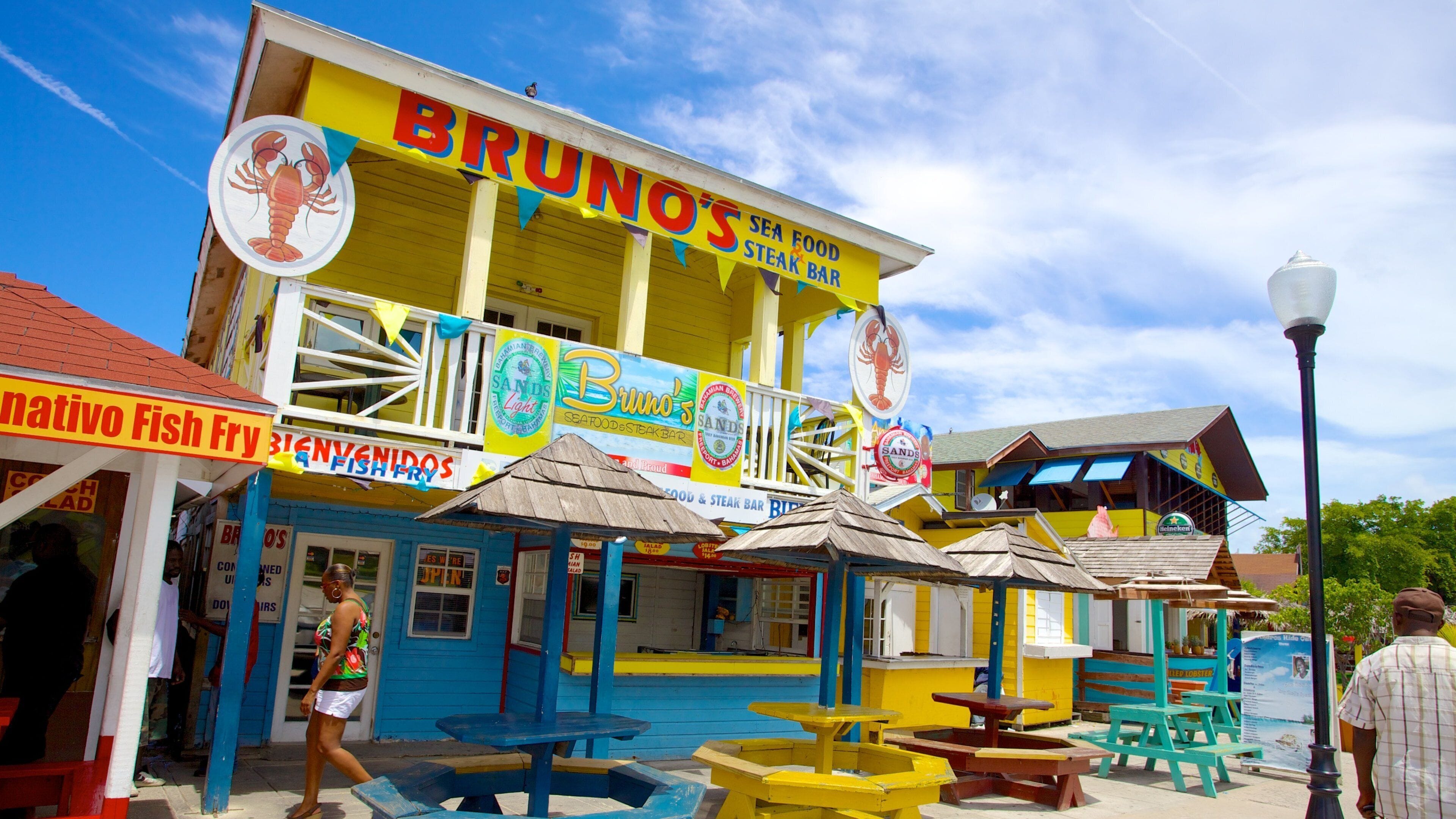
Nassau
The Out Islands: Why Harbour Island Is the Bahamas at Its Best
January 16, 2026
Beyond Nassau, the Bahamas changes scale. Harbour Island offers a version of the Caribbean that is quieter, more precise, and less mediated.
The Bahamas are often approached through Nassau.
The capital provides access, infrastructure, and a version of the islands that is structured around arrival — ports, resorts, and a system designed to accommodate movement at scale. This structure is effective, but it also defines expectations in a way that does not fully represent the archipelago.
Beyond Nassau, the Bahamas change.
The Out Islands — a broad term that refers to the islands outside the capital — operate at a different scale. Movement slows, density reduces, and the relationship between land, water, and daily life becomes more direct. Among these islands, Harbour Island offers one of the most precise expressions of this shift.
TravelScope approaches Harbour Island not as an alternative to Nassau, but as a continuation beyond it — a place where the structure of the Bahamas becomes more legible when it is less mediated.


The Transition: Leaving Nassau
Reaching Harbour Island requires a transition that is both logistical and perceptual.
The journey typically involves a short flight or ferry, followed by a transfer that places you within an environment that is immediately different from Nassau. The scale reduces. Infrastructure becomes less visible. Movement slows.
This transition is not gradual. It is defined by contrast.
Leaving Nassau is not only about distance. It is about moving from a structured system into one that is more open.
The Scale: A Different Measure of Space
Harbour Island is small, but its scale is not limiting.
Distances are short, but they are not compressed. Movement occurs at a pace that allows the environment to remain visible rather than passing unnoticed. Streets, beaches, and open spaces connect without requiring speed.
This creates a different relationship with space. You are not navigating efficiently. You are moving continuously.
The island does not need to be large to feel complete.
The Beach: Pink Sand as Condition
The most recognizable feature of Harbour Island is its pink sand beach.
The color is subtle, often more visible under certain light conditions, but it defines the identity of the coastline. The beach extends along the eastern side of the island, uninterrupted and consistent in its structure.
What distinguishes it is not only appearance, but continuity. There are no abrupt changes, no heavy development that interrupts the line of sand and water. The environment remains stable.
Walking along the beach becomes a primary activity, not because of variation, but because of consistency.
The Water: Clarity and Depth
The water surrounding Harbour Island reflects the conditions of the broader Bahamas, but with a level of clarity that is particularly pronounced.
Shallow areas extend gradually, creating a gradient that shifts in color from near-transparent to deeper blue. Movement is minimal, and the surface remains relatively stable.
Entering the water is immediate. There is no threshold to cross, no significant adjustment required.
This accessibility changes the experience. The ocean becomes an extension of the land.
The Town: Dunmore and Everyday Life
Dunmore Town, the primary settlement on Harbour Island, operates without emphasis.
Streets are narrow, lined with pastel-colored houses that reflect both historical structure and ongoing adaptation. There is no central landmark that defines the town. Instead, it is organized through repetition — houses, small shops, and local spaces that form a continuous environment.
Movement here is informal. Golf carts replace cars, and the pace aligns with the scale of the island.
The town is not presented as an attraction. It is lived.
The Rhythm: Days Without Urgency
Time on Harbour Island is structured differently.
Days are not divided into fixed segments. Activities extend, overlap, and adjust based on conditions rather than schedules. Morning blends into afternoon, and evening arrives without abrupt transition.
This does not eliminate routine. It redefines it.
The absence of urgency is not a lack of structure. It is a different form of it.
The Access: Limited but Sufficient
Reaching Harbour Island requires more effort than remaining in Nassau.
Flights are less frequent, transfers less direct, and services more limited. Once on the island, options remain sufficient, but not extensive.
This limitation is not a disadvantage. It is part of the structure.
Reduced access maintains the conditions that define the island. It prevents compression and preserves scale.
The Atmosphere: Stability Over Variation
Harbour Island does not rely on constant change to sustain interest.
Its environment remains relatively consistent. Light shifts, weather changes, but the underlying structure persists. The beach remains the beach, the town remains the town.
This stability allows perception to deepen rather than reset. The experience accumulates rather than restarting each day.
The Contrast: Nassau vs Harbour Island
Understanding Harbour Island is inseparable from understanding Nassau.
The two operate under different systems. Nassau concentrates activity, organizes movement, and prioritizes accessibility. Harbour Island distributes activity, slows movement, and limits access.
Neither replaces the other. They define each other.
Experiencing both clarifies the structure of the Bahamas as a whole.
The Limit: What It Is Not
Harbour Island is not a place of constant activity.
It does not provide a wide range of attractions, nor does it sustain high levels of entertainment. Expecting variety in the conventional sense leads to misinterpretation.
It is also not isolated in the sense of being disconnected. It remains part of a broader network of islands, but operates at a different scale within it.
Closing
The Bahamas are often experienced through Nassau — a point of entry that defines the initial understanding of the islands.
Harbour Island exists beyond this entry point, offering a version of the Bahamas that is less structured, less mediated, and more dependent on the relationship between space, time, and movement.
To experience it fully is not to seek out specific highlights, but to adapt to its scale — to move without urgency, to observe without expectation, and to allow the environment to define the rhythm of the stay.
📍 Explore Nassau in depth — read the full TravelScope Nassau Experience Guide →
/experiences/nassau-travel-guide