Iceland
Beyond the Golden Circle: Where Iceland Begins
January 4, 2026
The Golden Circle is where most journeys start — but understanding Iceland requires moving beyond it, into a landscape that is less structured and more demanding.
The Golden Circle is often presented as Iceland in miniature — a compact route that links some of the country’s most recognizable landscapes into a single, manageable loop. It is efficient, accessible, and widely used, especially by travelers with limited time. Yet while it offers a strong introduction, it can also shape expectations in ways that limit what comes next.
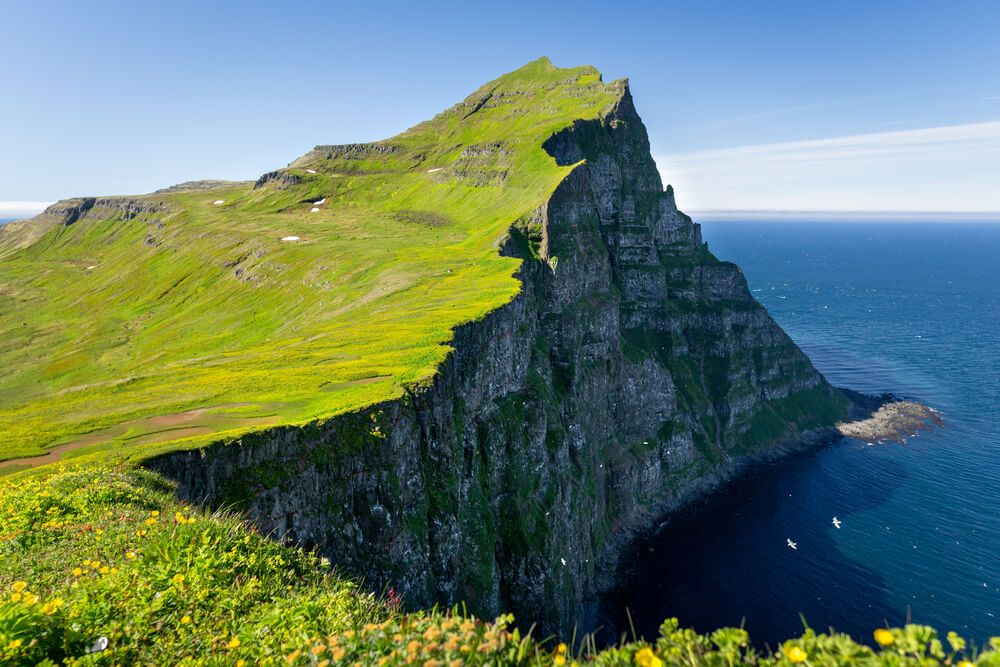
Beyond the Golden Circle is not simply more of the same. It is a different kind of landscape — less organized, less predictable, and less immediately legible. Distances expand, infrastructure thins, and the relationship between traveler and environment becomes more direct.
TravelScope treats the Golden Circle not as a destination in itself, but as a point of departure — a place to understand what Iceland is, and what it becomes once its most accessible layer is left behind.

The Golden Circle: What It Is — and What It Isn’t
The Golden Circle connects three primary sites: Þingvellir National Park, the Geysir geothermal area, and Gullfoss waterfall. Together, they form a loop that can be completed in a single day from Reykjavík, and their accessibility defines much of their appeal.
Each site is distinct. Þingvellir introduces geological structure — the visible separation of tectonic plates. Geysir presents geothermal activity in its most concentrated form. Gullfoss provides scale and force through water movement. These elements are not representative of Iceland in total, but they establish its key components.
What the Golden Circle does effectively is condense these components into a sequence that is easy to navigate. What it does less effectively is convey how these elements operate when they are not arranged for convenience.
Understanding this distinction is essential before moving beyond it.
The Density: Movement Under Constraint
The Golden Circle is one of the most visited areas in Iceland, and this density shapes the experience.
Parking areas, defined paths, and structured viewpoints organize movement through each site. The environment is controlled to manage volume, and this produces a form of accessibility that is both efficient and limiting. The landscape is visible, but it is also framed.
This does not reduce its value. It clarifies its function.
The Golden Circle is designed to be entered, observed, and exited within a defined timeframe. It introduces Iceland through a system that prioritizes clarity over immersion.
The Transition: Leaving the Circle
The most significant moment in the Golden Circle is not within it, but after it.
Leaving the loop — whether toward the south coast, the highlands, or more remote regions — introduces a shift that is immediately perceptible. Roads become less structured, distances less predictable, and the density of visitors reduces.
The landscape does not change dramatically at once. It reconfigures gradually. What was previously organized becomes distributed. What was framed becomes open.
This transition marks the beginning of a different experience.
The South Coast: Continuity and Expansion
Moving beyond the Golden Circle toward the south coast extends the landscape into a longer sequence.
Waterfalls, black sand beaches, and glacial formations appear along a route that remains accessible, but less condensed. The distance between points increases, and movement becomes more continuous.
This region maintains a level of structure — roads are reliable, access is consistent — but it introduces greater scale. The environment feels less curated, more expansive, and less constrained by defined viewpoints.
The south coast represents the first step beyond the Golden Circle — an expansion rather than a departure.
The Highlands: Absence of Structure
Beyond both the Golden Circle and the south coast lie the highlands — a region that operates under entirely different conditions.
Access is limited, roads are seasonal, and infrastructure is minimal. Movement requires planning, and the environment does not accommodate improvisation in the same way as more accessible areas.
What defines the highlands is not specific landmarks, but the absence of them. The landscape becomes more uniform in its scale, less interrupted by identifiable points, and more dependent on conditions.
This is not the next step for every traveler. It is a different category of experience.
The Principle: Selection Over Coverage
The most common mistake when moving beyond the Golden Circle is attempting to replicate its structure.
Trying to see as many locations as possible, to compress distance into efficiency, or to follow a fixed sequence reduces the experience to a series of disconnected points. What works within the Golden Circle does not translate outside it.
The alternative is selection. Choosing fewer locations, allowing more time for movement, and accepting that not everything can be seen within a single journey produces a more coherent understanding of the landscape.
Iceland does not reward coverage. It rewards continuity.
The Conditions: Light, Weather, and Time
Beyond the Golden Circle, conditions play a more active role.
Light changes perception, particularly in regions where the landscape is less structured. Weather affects not only comfort, but access and safety. Time becomes less predictable, as distances expand and movement slows.
These factors are not external. They are part of the experience.
Adapting to them requires flexibility. Fixed plans become less effective. Responsive movement becomes more important.
The Return: Understanding the Circle Differently
After traveling beyond the Golden Circle, returning to it — even conceptually — changes its meaning.
What initially appeared comprehensive becomes partial. What seemed expansive becomes condensed. The sites remain the same, but their position within the broader landscape becomes clearer.
The Golden Circle is not diminished by this. It is contextualized.
Closing
The Golden Circle is often the beginning of a journey through Iceland, and for many, it is also the end. It offers a structured introduction, one that is efficient, accessible, and visually immediate.
What lies beyond it is less structured, less predictable, and more demanding. It requires adjustment — in pace, in expectation, and in the way the landscape is approached.
To understand Iceland fully is not to reject the Golden Circle, but to move beyond it — to allow the country to expand beyond the framework through which it is most commonly seen.
📍 Explore Iceland in depth — read the full TravelScope Iceland Experience Guide →
/experiences/iceland-travel-guide