Iceland
The Westfjords: Iceland’s Last Frontier
January 2, 2026
Remote, fragmented, and largely untouched, the Westfjords represent a version of Iceland that exists beyond the routes most visitors follow.
The Westfjords are often described as Iceland’s last frontier, a phrase that risks turning geography into an abstraction. It suggests remoteness, difficulty, and romantic isolation, but it does not fully capture what sets this region apart from the rest of the country. The difference is not only distance, but structure.
While much of Iceland has been organized through roads, itineraries, and a sequence of identifiable highlights, the Westfjords remain fragmented. The coastline is irregular, cut deeply by fjords that reach inland and separate areas that look close on a map but take significant time to connect. Movement here is not linear. It is recursive.
TravelScope approaches the Westfjords not as a destination to cover, but as a region to enter gradually — one that resists compression and rewards those willing to adapt to its scale and conditions.

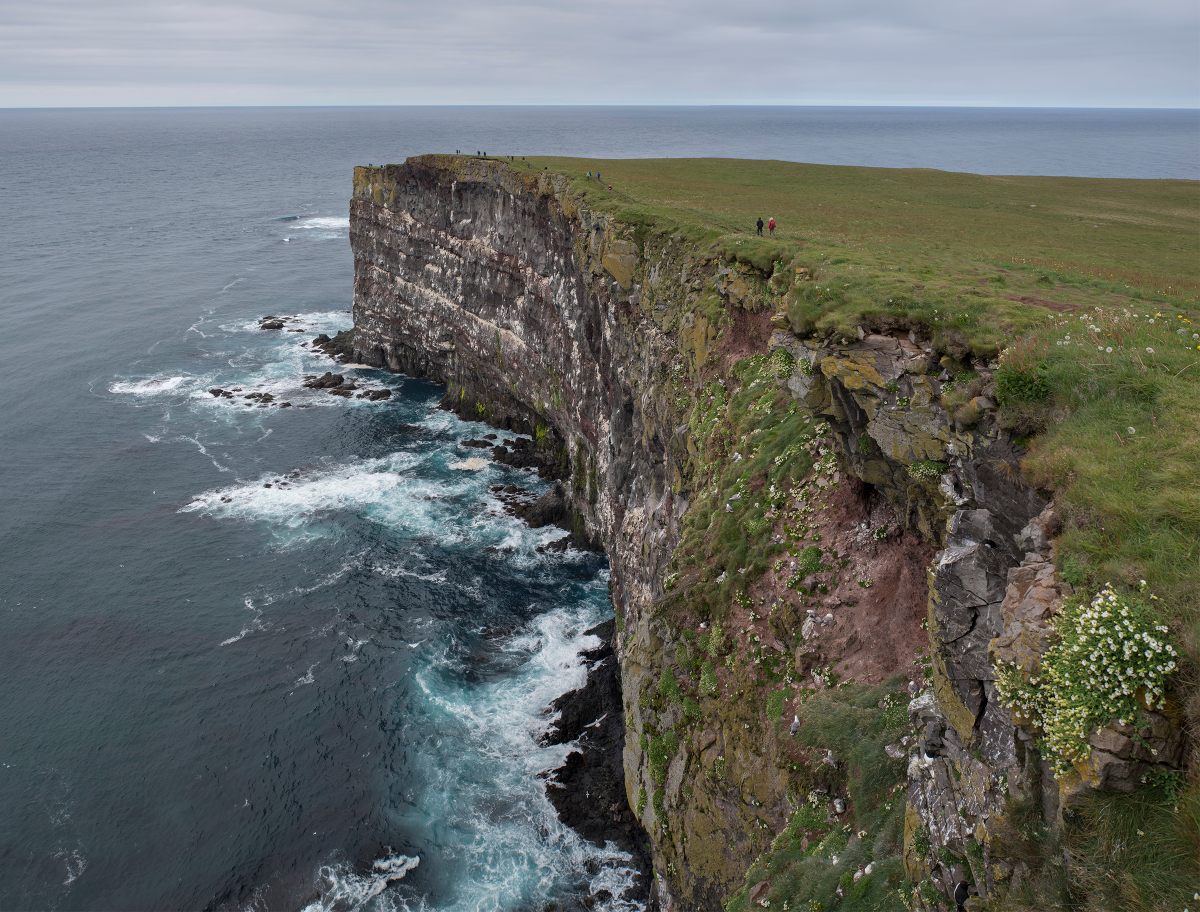
The Geography: Fragmentation as Structure
The defining feature of the Westfjords is not what they contain, but how they are arranged.
Fjords extend inland in multiple directions, creating a landscape in which distance is measured not in straight lines, but in curves and detours. A point that appears a few kilometers away may require hours to reach. Roads follow the coastline, adapting to the terrain rather than reshaping it, and this produces a constant alternation between proximity and separation.
This fragmentation changes how the region is experienced. There is no central axis, no single route that organizes movement. Instead, the journey unfolds through sequences — entering one fjord, leaving it, and entering another, each with its own scale, light, and conditions.
Understanding this structure is essential. Without it, the Westfjords can feel inefficient. With it, they become coherent.
The Movement: Driving Without Continuity
Driving in the Westfjords is not about covering distance. It is about accepting interruption.
Roads vary in quality and type. Paved sections transition into gravel without clear demarcation, and conditions change with weather. Speed is not constant, and planning based on distance alone is unreliable. What matters is time — and the willingness to allow it to expand.
This produces a different kind of travel. The journey is not secondary to the destination. It is the primary experience. Each stretch of road introduces variation — in elevation, in visibility, in exposure to wind and water — and these variations accumulate.
Stops are frequent, often unplanned. A change in light, a shift in weather, or the sudden appearance of a landscape element can alter movement without requiring justification.
The Scale: Absence and Presence
The Westfjords are defined as much by what is absent as by what is present.
Settlements are small and dispersed. Services are limited, and intervals between them can be long. There are no major urban centers, and the infrastructure that supports tourism elsewhere in Iceland is reduced.
This absence is not a lack. It is a condition that shapes perception. Space becomes more pronounced, distances more meaningful, and the relationship between the traveler and the environment more direct.
Presence, when it occurs, is therefore more precise. A small town, a single building, or a stretch of coastline can define an entire segment of the journey.
The Light: Changing Conditions
Light in the Westfjords is variable and often unpredictable.
Cloud cover moves quickly, altering the landscape within minutes. Sunlight can isolate sections of a fjord while leaving others in shadow, creating contrasts that shift continuously. During summer, extended daylight flattens time, allowing movement to extend without clear boundaries between day and night.
This variability reinforces the need for flexibility. The same location can present entirely different conditions depending on when it is reached. Fixed expectations are less effective than responsiveness.
The Weather: Constraint and Definition
Weather in the Westfjords is not a background condition. It is a defining element.
Wind, rain, and temperature shifts affect not only comfort, but movement. Roads can become more difficult, visibility can reduce, and plans may need to be adjusted or abandoned.
These constraints are not exceptional. They are part of the structure of the region. To travel here is to incorporate them rather than avoid them.
The Places: Selecting Rather Than Covering
The Westfjords contain specific points of interest — waterfalls, cliffs, hot springs — but their significance lies less in their individual identity than in their position within the broader landscape.
Dynjandi waterfall, for example, is often cited as a highlight. It is, but its impact is amplified by the journey required to reach it. Similarly, coastal cliffs and remote pools gain meaning through context rather than isolation.
Attempting to visit too many locations reduces the experience to movement between points. Selecting fewer and allowing time to expand around them produces a more coherent understanding of the region.
The Rhythm: Time Without Compression
Time in the Westfjords does not compress easily.
Distances extend, conditions vary, and the absence of density reduces the pressure to move quickly. Days become defined less by schedule and more by progression — moving from one fjord to another, from one condition to the next.
This rhythm is not imposed. It emerges.
Adapting to it requires a shift in expectation. Efficiency becomes less relevant. Continuity becomes more important.
The Limit: When to Go
Access to the Westfjords is seasonal.
Winter conditions can make travel significantly more difficult, with limited daylight and increased weather variability. Summer offers extended light and more stable access, but also introduces a higher volume of visitors, though still far below other regions of Iceland.
The choice of season affects not only logistics, but perception. The same landscape presents differently under different conditions.
Closing
The Westfjords are often positioned at the edge of Iceland — geographically, logistically, and conceptually. They are described as remote, difficult, and separate from the more accessible parts of the country.
What they offer is not simply distance, but a different structure of experience — one that resists simplification and requires adjustment. Movement slows, scale expands, and the relationship between traveler and landscape becomes more direct.
To enter the Westfjords is not to reach a destination in the conventional sense. It is to accept a way of moving through space that is defined not by efficiency, but by attention and continuity.
📍 Explore Iceland in depth — read the full TravelScope Iceland Experience Guide →
/experiences/iceland-travel-guide

