Lisbon
Alfama at Dawn: The Lisbon That Belongs to Its Residents
January 22, 2026
Before the tourists arrive and before the tuk-tuks begin, Alfama belongs to the people who have always lived here.
Alfama at dawn belongs to a cast of characters the tourist version of the neighbourhood never meets. The woman who has lived in the same building for forty years, hanging her washing between the windows before 7am. The person who opens the pastry shop at 6:30, drinking the first espresso standing at their own counter before the first customer arrives. The cat — there are always cats in Alfama, dozens of them — moving through the neighbourhood with the proprietary confidence of animals who have decided these streets belong to them. The fado singer who finished work at 2am, walking home through quiet alleys with the gait of someone who has performed all evening and is now, finally, simply existing.
Alfama at dawn is Lisbon at its most honest — stripped of the machinery of tourism that arrives with the tuk-tuks at 9am, the guided walking tours at 10am, and the cruise ship passengers at 11am, and returned to the character it has carried through every transformation of the city around it. The neighbourhood survived the 1755 earthquake that destroyed most of Lisbon because it was built on rock rather than compacted river sediment that liquefied under the tremor, and it has endured every later wave of urban change — the Salazar dictatorship, the Carnation Revolution, the financial crisis, the tourism boom — with its essential character more or less intact. Alfama is Moorish in its origins, medieval in its layout, and entirely itself in daily life. It rewards patience and early rising above all other virtues.
This guide is about a morning in Alfama — what to do, where to go, and why the 5:30am alarm is the best travel decision you will make in Lisbon.

The Climb: Before 7am
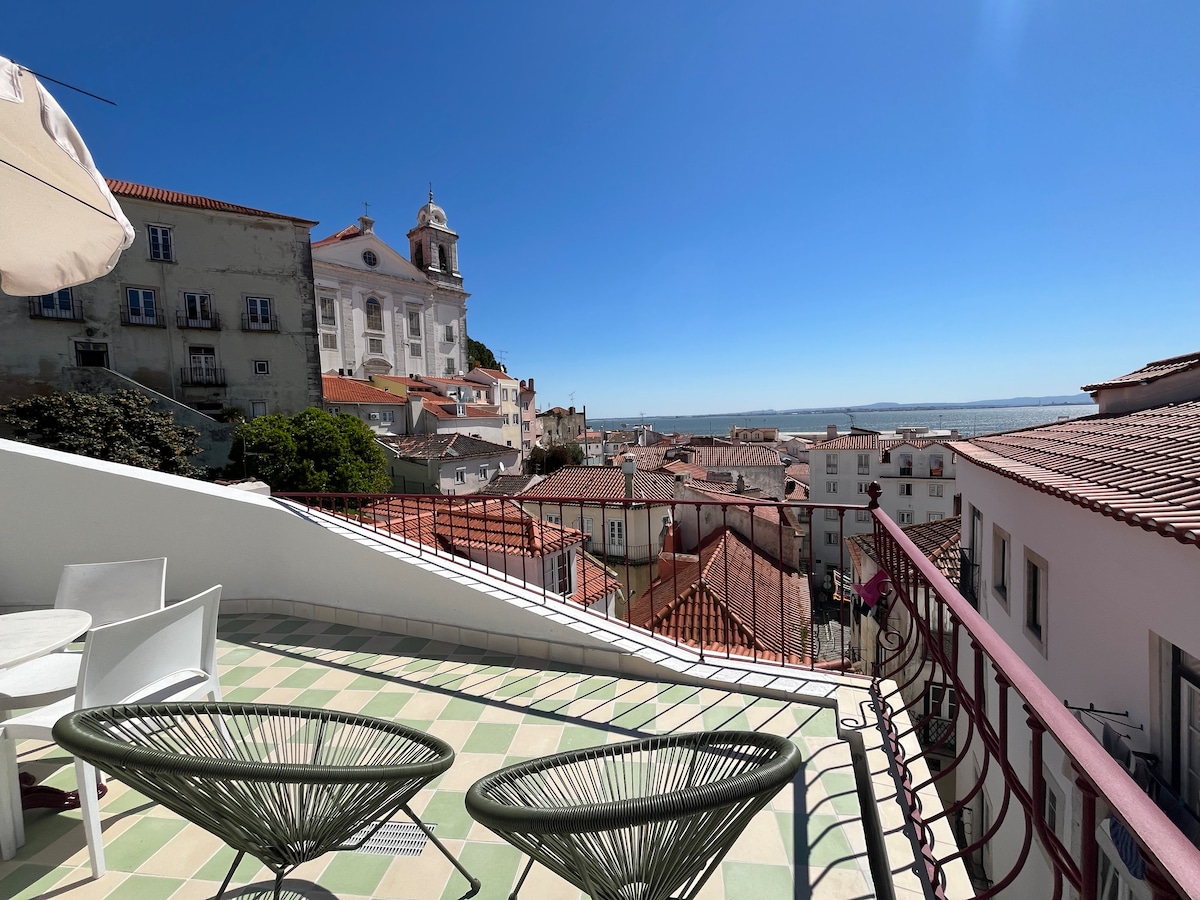
Alfama is a hill neighbourhood — one of Lisbon's seven hills, built on the steep slope between the São Jorge Castle at the summit and the Tagus waterfront below — and arriving in it before 7am means arriving before the heat of the day has established itself and before the tourist traffic has made the narrow streets difficult to navigate. Walk from the Alfama waterfront — the Largo do Chafariz de Dentro, where the neighbourhood meets the river — and climb through the network of alleys that lead upward toward the castle.
The correct approach to Alfama is without a map and without a destination. The neighbourhood's layout — a medieval accretion of alleys, stairs, and sudden viewpoints that follows the logic of the hill rather than any urban plan — is impossible to navigate rationally and entirely rewarding to navigate instinctively. Turn toward the sound of water or the smell of coffee. Follow the cat. Take the stairs that look interesting rather than the alley that looks direct. You will get lost. Getting lost in Alfama before 7am is one of the great small pleasures of European travel.
The miradouros — the viewpoints that look out over the city and the Tagus — are at their most extraordinary in the early morning. The Miradouro de Santa Luzia, with its azulejo panels depicting pre-earthquake Lisbon and its bougainvillea-draped pergola, faces east toward the Tagus and catches the morning sun with a directness that makes the light on the water almost painful to look at. The Miradouro das Portas do Sol, slightly higher, faces southeast toward the dome of the São Vicente de Fora church and the rooftops of the lower neighbourhood in a composition that has been photographed ten million times and that is still, in the early morning light, genuinely extraordinary.
The Fado Houses: Understanding What Happened Here Last Night
The fado houses of Alfama — the small restaurants and clubs where fado is performed on Friday and Saturday nights — are closed at dawn, but the neighbourhood they have animated since midnight carries something of that performance into the morning. Fado — the music of saudade, of longing, of the particular Portuguese relationship with loss and beauty that has no equivalent in any other culture — is not a tourist construct. It is a living tradition, practised in Alfama and in a few other Lisbon neighbourhoods with a seriousness and a continuity that reflects the music's role in the community that produced it.
The Casa de Fado, the fado museum near the bottom of the neighbourhood, opens at 10am and gives the best introduction to the music's history and its relationship with Alfama — the instruments, the costumes, the recordings from the great fadistas of the twentieth century, the explanation of how a music of grief became Portugal's most distinctive cultural export. Visit before the afternoon crowds if you can.
To hear fado in Alfama rather than in a tourist restaurant, ask at your accommodation for recommendations — the smaller, less advertised venues, the ones that do not appear on the first page of search results, are where the music is most genuine. The audience at these venues is mixed — tourists and Lisboetas in proportions that vary by night and by venue — and the performance is not a show but an event, with the silence and the attention that fado demands and that its best audiences provide.
The Feira da Ladra: Tuesday and Saturday
The Feira da Ladra — the Thieves' Market — is Lisbon's oldest flea market, operating on the Campo de Santa Clara at the eastern edge of Alfama on Tuesday and Saturday mornings. The market is at its best before 9am, when the dealers are setting up and the serious buyers — the antique shop owners, the vintage clothing traders, the collectors who know exactly what they are looking for — are making their first passes through the stalls before the casual visitors arrive.
The selection is as varied as any urban flea market in Europe — old azulejo tiles salvaged from demolished buildings, Portuguese colonial-era objects, books in Portuguese and French and occasionally English, vintage clothing of variable quality and occasional extraordinary finds, the general accumulation of Lisbon domestic life over several generations. The prices are negotiable and the negotiation is expected — arriving at the first stated price without attempting to reduce it is considered, by the more experienced vendors, mildly eccentric.
Buy an azulejo tile if you find one that speaks to you — the blue-and-white hand-painted tiles that cover the facades of Lisbon's buildings are one of the city's most distinctive aesthetic elements and a piece rescued from the Feira da Ladra is a souvenir of genuine cultural meaning rather than the manufactured variety. The best tiles are rare and the experienced dealers know what they have — but the occasional extraordinary piece still surfaces among the general accumulation.
The Pastéis and the Coffee: Where Alfama Eats Breakfast
The correct Alfama breakfast is not in a café but at a pastelaria — the Portuguese pastry shop that serves coffee, pastéis de nata, and occasionally toast with butter and honey, from early morning until the late afternoon lull. The pastelarias of Alfama are neighbourhood institutions — the same customers at the same time every morning, the same barista who knows the order before it is given, the same rhythm of coffee cups on the zinc counter and conversation that moves between the people at the bar with the ease of a community that has been having the same conversations for years.
The pastel de nata — the custard tart in its fluted pastry case that is Portugal's most famous and most copied pastry — is at its best eaten warm from the oven, dusted with cinnamon and powdered sugar, at the counter of the pastelaria rather than on a plate at a table. The difference between a warm pastel de nata eaten standing at a counter in Alfama at 7:30am and the same pastry eaten cold from a box at an airport is approximately the difference between understanding Portugal and not understanding it at all.
The coffee in Lisbon — the bica, which is the Lisbon name for espresso — is excellent throughout the city and extraordinary in the better pastelarias, where the machines are maintained with the seriousness that good coffee requires and the beans are fresh. Order a bica rather than a café — the distinction is partly linguistic and partly about what you are signalling about your relationship with the city.
The São Jorge Castle: The Summit
The São Jorge Castle at the top of Alfama — the Moorish fortification that has dominated the hill since at least the eleventh century — opens at 9am and is worth visiting in the first hour, before the tour groups arrive. The castle is not architecturally extraordinary — much of what is visible is medieval Portuguese reconstruction rather than Moorish original — but the views from the battlements are the finest available in Lisbon, looking out over the entire city and the Tagus and the hills of the south bank with a completeness and clarity that the ground-level miradouros cannot provide.
The archaeological site within the castle — where excavations have revealed layers of occupation from the Iron Age through the Moorish period to the medieval Portuguese city — is one of the most interesting in Portugal and consistently undervisited. The guide available at the entrance is worth taking rather than navigating the site independently — the archaeology is complex and the interpretation makes the difference between seeing a collection of walls and understanding a city's entire history compressed into a single hillside.
Alfama at dawn is Lisbon before it performs. It is the neighbourhood at its most honest — climbing its hill, hanging its washing, drinking its coffee — and it is the best possible introduction to a city that rewards the traveler who arrives early and asks nothing of it except to be allowed to watch.
📍 Explore Lisbon in depth — read the full TravelScope Lisbon Experience Guide → /experiences/lisbon-travel-guide
Stay in the TravelScope Circle
Get stories and new curated experiences — delivered to your inbox.