Lisbon
Sintra in a Day: The Complete Guide to Lisbon’s Royal Escape
December 18, 2025
Palaces, forests, and Atlantic views — all within an hour of Lisbon. Sintra is not a place you visit. It’s a place you navigate carefully.
Sintra is close enough to Lisbon to feel inevitable — a forty-minute train ride from the city center, a name on every itinerary, and palaces that look as though they were designed without reference to reality. And yet, despite its proximity, Sintra resists casual visits. It does not reveal itself easily, and it does not reward improvisation.
The palaces are scattered across forested hills. The roads are narrow and winding. The microclimate — cooler, wetter, often wrapped in mist — turns distances that look trivial on a map into something slower and more deliberate. A day trip that seems simple can become, without planning, a sequence of queues, uphill walks, and missed opportunities.
TravelScope approaches Sintra not as a checklist of monuments but as a landscape to be navigated — one that, with the right structure, offers one of the most concentrated and visually extraordinary days within reach of a European capital.

The Landscape: Why Sintra Feels Different
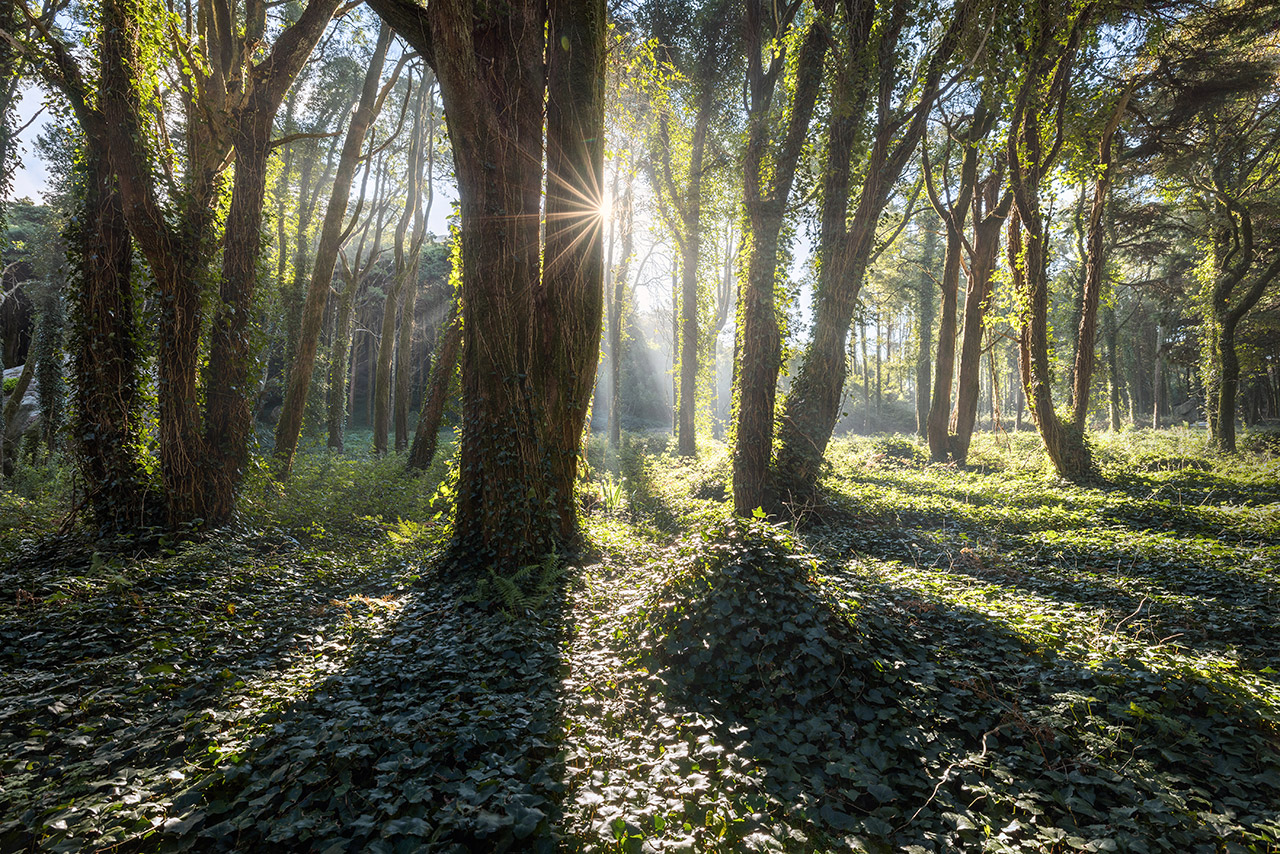
Sintra’s uniqueness begins with its geography. The Serra de Sintra — the low mountain range that rises between Lisbon and the Atlantic — creates a microclimate that is noticeably cooler and more humid than the capital. While Lisbon sits in sun and heat, Sintra is often covered in mist, its forests dense and green in a way that feels almost northern rather than Mediterranean.
This climate shaped the area’s history. Portuguese royalty chose Sintra not for convenience but for escape — a retreat from the summer heat of Lisbon and a place where architecture could be imagined differently. The result is a concentration of palaces that are less about defense or administration and more about atmosphere, symbolism, and spectacle.
Understanding this changes how you move through Sintra. You are not visiting a town with attractions. You are moving through a designed landscape.
The Route: How to Structure the Day
A successful day in Sintra depends almost entirely on order and timing. Without both, the experience quickly collapses into queues and fatigue.
Morning: Pena Palace First
Start with the Palácio da Pena, and start early. This is not optional.
Arrive at Sintra station no later than 8:30am and go directly up to the palace. Whether you take a taxi, a rideshare, or the 434 tourist bus, the objective is the same: reach the entrance before the main flow of visitors arrives.
Seen early, Pena Palace feels suspended above the forest — a structure that belongs more to imagination than to geography. Seen late, it becomes crowded to the point of losing definition.
Walk the terraces slowly. The views are not secondary — they are part of the architecture.
Late Morning: Quinta da Regaleira
From Pena, descend toward the town and continue to Quinta da Regaleira — either on foot (downhill) or by a short ride.
If Pena is theatrical, Regaleira is symbolic. The estate is structured around hidden meanings — Masonic references, esoteric symbolism, and architectural illusions. The Initiation Well, with its spiraling descent into darkness, is the most recognizable element, but it is only one part of a larger system of tunnels, gardens, and concealed passages.
This is not a place to rush. Allow time to move without a strict route. The experience improves when you stop trying to see everything.
Early Afternoon: Sintra Town
Return to the historic center for a short pause.
Sintra town is compact and often crowded, but it offers a necessary change in scale. After the elevation and abstraction of the palaces, the streets feel grounded — tiled facades, small shops, bakeries.
Stop for a travesseiro, the local almond pastry, and a coffee. Keep it light. The day is not finished, and the terrain still requires attention.
Optional Extension: Cabo da Roca
If the morning has been efficient, extend the day to Cabo da Roca — the westernmost point of continental Europe.
Here, the landscape opens completely. The forest disappears, replaced by cliffs and the Atlantic. The wind is constant, the scale immediate. After the constructed environments of Sintra, Cabo da Roca feels exposed and elemental.
It is not essential, but it completes the geography of the day in a way that few visitors experience.
Practical Intelligence: What Most People Get Wrong
The most common mistake in Sintra is underestimating time and terrain.
Trying to see too many palaces leads to rushing. Starting late guarantees queues. Attempting to walk everything is unrealistic for most visitors.
TravelScope recommendation:
Choose two main sites — Pena Palace and Quinta da Regaleira — and build the day around them. Add the town, and only extend further if time and energy allow.
Use transport strategically. Go uphill with vehicles. Walk downhill when possible.
The Return: Back to Lisbon
Return to Lisbon in the late afternoon or early evening.
The train to Rossio takes approximately forty minutes and runs regularly. As the landscape flattens and the temperature rises, the shift is noticeable. Sintra recedes quickly — its forests and elevation giving way to the density and light of the capital.
Closing
Sintra is often described as a fairytale destination — a phrase that simplifies a place that is, in reality, far more structured and deliberate.
Seen without planning, it becomes crowded and fragmented. Seen correctly — early, focused, and with restraint — it reveals itself as one of the most concentrated landscapes of architecture and atmosphere in Europe.
To visit Sintra in a day is not to see everything. It is to choose well.
📍 Explore Lisbon in depth — read the full TravelScope Lisbon Experience Guide →
/experiences/lisbon-travel-guide
