Paris
The Left Bank on Foot: A Morning in Saint-Germain-des-Prés
February 27, 2026
The neighbourhood that invented the modern café, the existentialist movement, and the idea that thinking is a form of pleasure worth pursuing.
Saint-Germain-des-Prés is the neighbourhood the world thinks it knows, and mostly does not. The version that lives in the global imagination — Sartre and de Beauvoir at the Café de Flore, Hemingway at the Brasserie Lipp, jazz in basement clubs, existentialism invented over coffee and cigarettes in the post-war years — is real enough as history. But it is not what the neighbourhood is now, and travelers who arrive looking for that version will find expensive boutiques, tourist-facing cafés, and the particular disappointment of a place whose mythology has outpaced its reality.
And yet Saint-Germain-des-Prés rewards a morning of serious attention in ways the disappointed tourist never discovers. The neighbourhood’s real qualities — its architectural beauty, its concentration of independent bookshops and galleries, its proximity to the finest food market in Paris, its human scale, and its riverside position — are not what the mythology advertises. The Left Bank in the early morning, before the tourists arrive and before the cafés fill with people performing their Saint-Germain experience, is one of the finest walking environments in Europe.
This is a guide to a morning in Saint-Germain-des-Prés — where to go, what to find, and how to experience a neighbourhood that has been famous for so long that most visitors forget to actually look at it.


Start at the Market: Marché Raspail
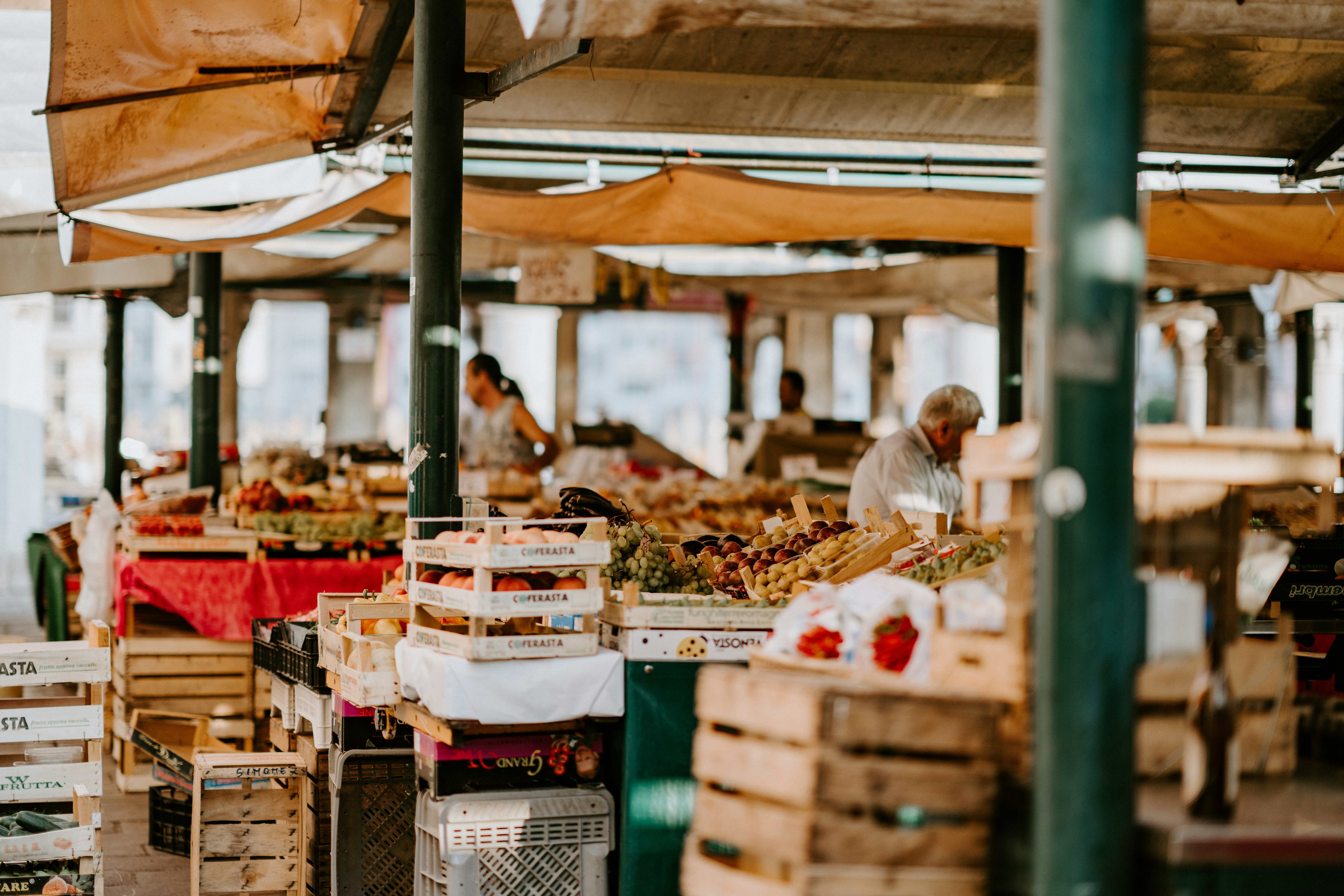
Begin at the Marché Raspail on the Boulevard Raspail, which operates as a conventional market on Tuesdays and Fridays and as an organic market on Sundays. The Sunday organic market — the Marché Biologique Raspail — is the finest farmers market in Paris and one of the finest in France, drawing producers from the Île-de-France, Normandy, Brittany, and the Loire Valley with produce of extraordinary quality. Arrive by 9am for the best selection and the most genuine market atmosphere — the producers still outnumber the customers at this hour, and the conversations that happen at the stalls, between the farmers and the chefs and the neighbourhood residents who have been coming here for years, are worth attending even if your French is limited.
Buy breakfast at the market — the bread from the Poilâne stall, the butter from the Normandy producer, the coffee from the roaster who sets up near the Boulevard Montparnasse end. Eat standing at the market rather than at a café. This is the correct Saint-Germain breakfast — not the tourist croissant at the Café de Flore but the market bread with good butter eaten in the open air among the people who live here.
The Bookshops of the Left Bank
Saint-Germain-des-Prés has been a neighbourhood of books since the publishing houses established themselves here in the seventeenth century, and it remains — despite the pressure of rising rents and online retail — the finest concentration of bookshops in Paris. The independent booksellers of the Left Bank are not tourist attractions. They are working businesses serving a neighbourhood that reads seriously, and the experience of browsing in them is entirely different from the experience of visiting Shakespeare and Company across the river, which is a literary monument rather than a bookshop.
La Hune, on the Boulevard Saint-Germain, was for decades the great art and architecture bookshop of Paris — it closed in 2015 and was replaced by a fashion shop, which is the story of Saint-Germain in miniature. But the independent booksellers that remain — the specialist shops on the Rue de Seine and the Rue Mazarine, the general booksellers on the Boulevard Saint-Germain — are worth an hour of serious attention.
The bouquinistes along the Seine — the green metal boxes fixed to the parapet of the river that sell second-hand books, prints, maps, and postcards — are the most distinctive feature of the Left Bank riverfront and have been here, in various forms, since the sixteenth century. Browse them seriously rather than photographing them casually. The prints and maps, in particular, are often extraordinary and occasionally cheap.
The Café de Flore and Les Deux Magots: The Mythology and the Reality
The Café de Flore and Les Deux Magots, facing each other across the corner of the Boulevard Saint-Germain and the Rue de Rennes, are the two most famous cafés in Paris and among the most famous in the world. Sartre wrote at the Flore. de Beauvoir wrote at the Flore. Picasso drank at the Flore. Hemingway preferred Les Deux Magots. The mythology is real — these things happened, in these rooms, at these tables.
The cafés today are expensive, tourist-facing, and staffed by waiters who have served enough visitors performing their Saint-Germain experience to have developed a professional distance from the mythology they are selling. The coffee costs four times what it costs at the bar of a neighbourhood café fifty metres away. The croissants are good. The seating is comfortable. The view of the boulevard is exactly as beautiful as it should be.
Go once, for one coffee, in the early morning before the tables fill. Sit outside if the weather permits. Look at the street rather than at your phone. This is the correct use of the Café de Flore — not as a restaurant or a café in any functional sense, but as a viewing platform for one of the great streets in Paris in the morning light. Pay the supplement, drink the coffee, leave before the tourists arrive. You will not need to return.
The Church of Saint-Germain-des-Prés
The church that gives the neighbourhood its name is the oldest in Paris — founded in the sixth century, rebuilt in the eleventh, and containing in its remarkably intact Romanesque interior some of the oldest standing architecture in the city. It is almost always overlooked by visitors who have come to the neighbourhood for the cafés and the shopping, which is their loss. The interior — dark, cool, and smelling of centuries of incense — contains the tomb of René Descartes and several extraordinary Delacroix murals in the side chapels that are among the finest decorative paintings in Paris.
Go at 8am, before the neighbourhood has fully woken. The early morning mass — still celebrated daily — gives the interior a quality of lived religious practice that the tourist-facing churches of the Right Bank do not have. Sit in the nave for ten minutes in the silence and the candlelight and you will understand why this neighbourhood has been producing serious thought for fifteen centuries.
The Walk to the Seine
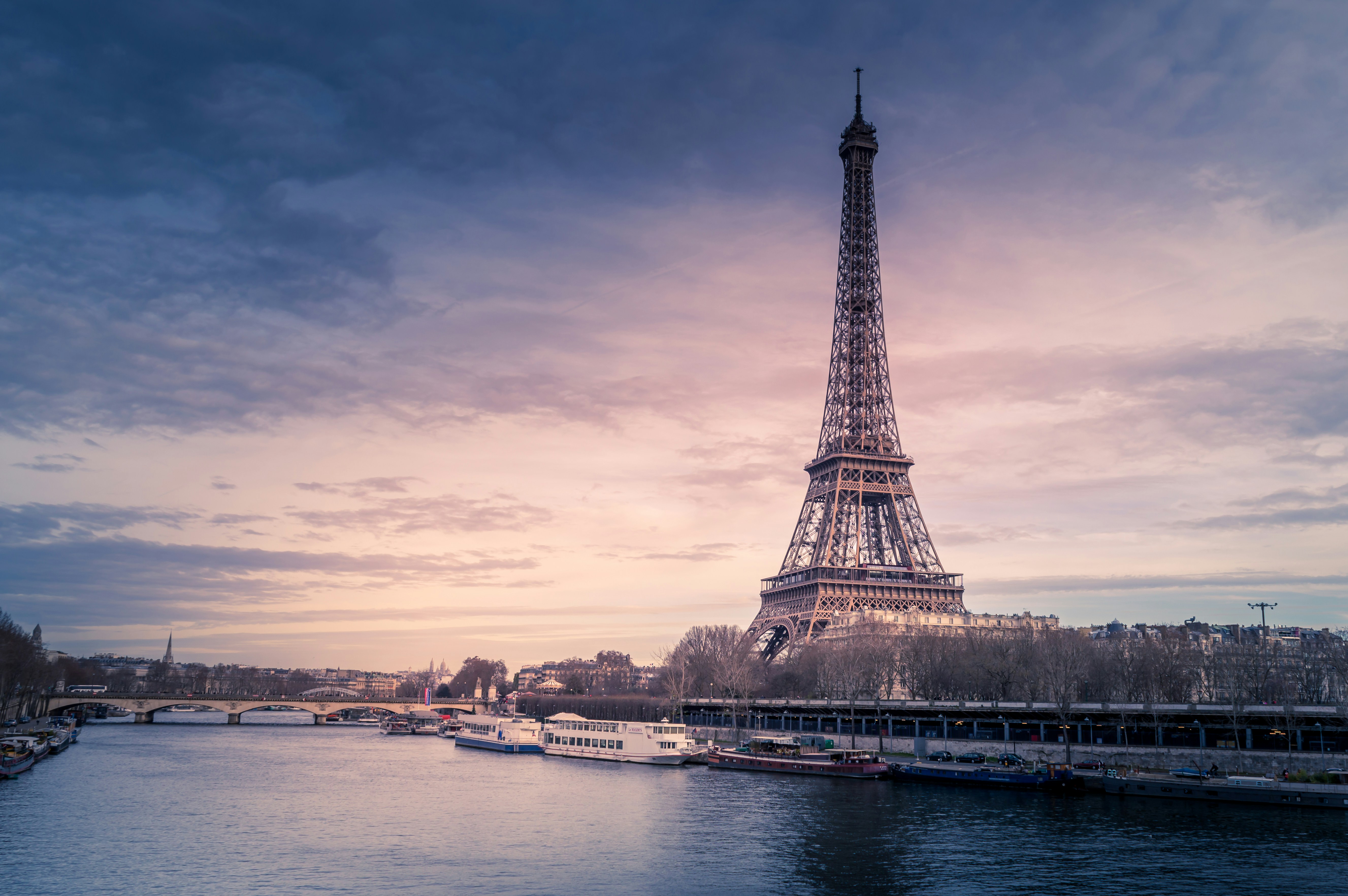
The morning in Saint-Germain ends at the Seine — a ten-minute walk from the church down the Rue Bonaparte, past the École des Beaux-Arts, to the Quai Malaquais. The view from the quai across the river to the Right Bank — the Louvre to the left, the Pont des Arts directly ahead, the Île de la Cité to the right — is one of the great urban views in Europe, and in the morning light, with the river moving below and the city just waking, it is as beautiful as anywhere in Paris.
Walk the Pont des Arts to cross the river if you need to continue — the lock-festooned bridge has been partially cleared of its famous padlocks, which were removed in 2015 when their weight threatened the structure, but the view from the bridge in either direction is unchanged and extraordinary. Or stay on the Left Bank and walk east along the quai toward Notre-Dame, whose reconstruction continues and whose approaching completion will change the eastern end of the Île de la Cité in ways that have not yet been fully anticipated.
The morning is complete. You have been in Saint-Germain for three hours, spent very little money, walked perhaps four kilometres, and seen the neighbourhood in a way that most of its visitors, arriving later and moving faster, will not.
Saint-Germain-des-Prés is not the neighbourhood of Sartre and Hemingway. It is the neighbourhood of the market on Sunday morning and the bookshop on the Rue de Seine and the church at 8am. The mythology is interesting. The neighbourhood is better.
📍 Explore Paris in depth — read the full TravelScope Paris Experience Guide → /experiences/paris-travel-guide
Stay in the TravelScope Circle
Get stories and new curated experiences — delivered to your inbox.